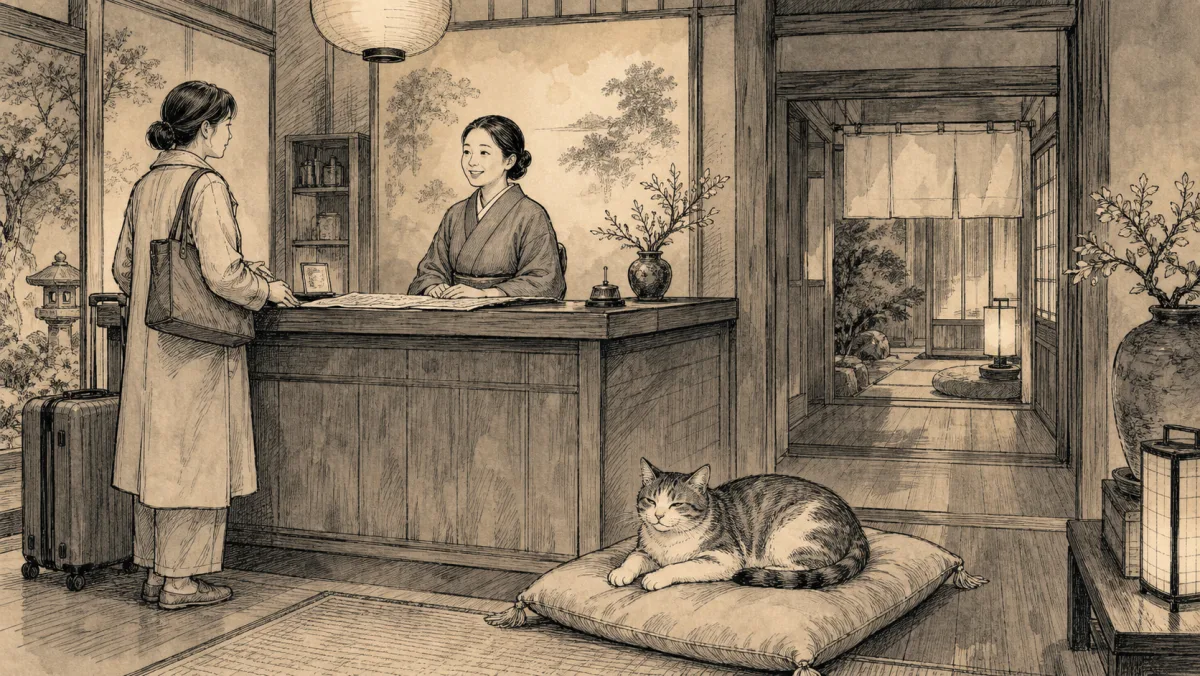
Hot spring inns and resident cats seem to go well together. However, there is no single document that shows the origin of the word “cats have always been in inns since ancient times.”It is necessary to separate the history of cats in general from the individual stories of each inn.
Cats have built relationships in human living spaces.
It is thought that the ancestors of domestic cats moved closer to the human habitat due to human settlement and the presence of rats and other animals associated with grain storage. However, this extensive history of domestication cannot directly explain why certain hot spring inns in Japan have cats.
Ryokan is close to where you live and work.
In small inns and guesthouses, the family’s residence and the inn’s workplace are close to each other, and the pet cat may live inside the inn as part of the inn. There are also cases where the cat becomes familiar with customers and is later called a “resident cat.”
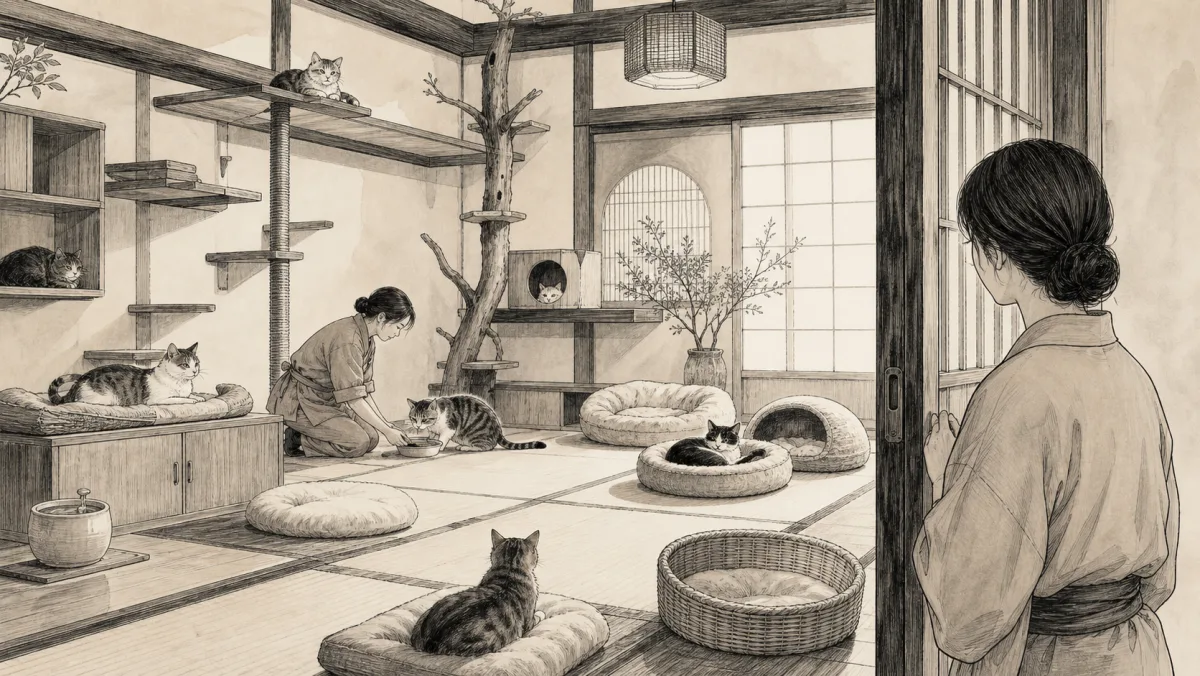
On the other hand, some inns separate the cats’ living areas for food hygiene, allergy prevention, and to prevent escape. Since it is a hot spring inn, cats do not necessarily have the freedom to walk around inside the inn.
Each inn has its own history.
The circumstances of how they met each inn vary, such as rescued cats, adopted lost cats, or people who have lived with cats for generations. When introducing the origin of a dish, check with the inn’s official website or through interviews, and avoid writing off hearsay as fact.
Respect both hot springs and cats
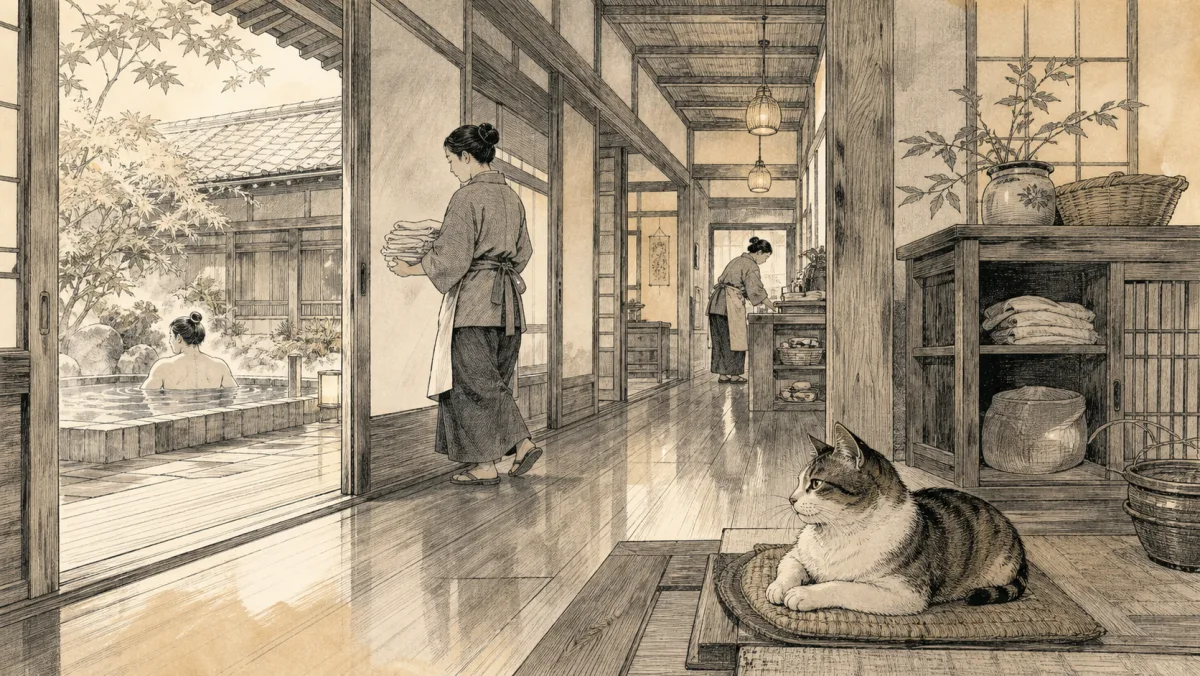
Hot spring facilities have bathing hours and hygiene rules, and cats need to rest and retreat. Avoid asking the cat to take you to the bath, taking pictures of the cat in the steam, or searching for him in the changing room.
In How to choose an accommodation where you can enjoy hot springs and resident cats, we will check the hot spring conditions and the distance from the cat separately.
Precautions when reading the story
- Is it the reason why the inn itself made it public?
- When was the information confirmed?
- Is the same cat still living there?
- Are you exaggerating the space the cat can fit in?
- Has it generalized to the entire region?
Divide into confirmable management formats
| How cats live in an inn | Things to check |
|---|---|
| The family’s cat goes out into the common areas | The area where the cat rests and where guests can meet |
| A rescued cat became a resident cat | The rescue history and current status disclosed by the inn |
| We have a special room for cats | Operating hours, reservations, and evacuation area |
| Cats sometimes come to the guest room | Current cases, exit methods, and things that are not guaranteed |
| There is a cat who lives outdoors | Scope of management of the accommodation and contact rules |
This classification does not prove the general theory that “hot spring inns have cats.”This is a perspective for organizing official information and interview content for each house.
Treatment in Neko Yado Research
In the accommodation introduction, hot spring attributes and A/B/C classification are recorded separately. Even if there are plenty of hot spring facilities, if the contact with the cat is unconfirmed, C, and even if the cat comes to the guest room, if there is no evidence that it is a hot spring, the hot spring attribute will not be added.
If the inn does not disclose the circumstances of the encounter with the cat, we will not create a story that connects it to old inn culture or measures against rats, and will state that the circumstances are unconfirmed.
Summary
The background behind encountering cats at hot spring inns is the long coexistence between humans and cats, as well as the stories of the families and protection of each inn. The best way to carefully preserve cat accommodation culture is to check each house one by one, rather than focusing on one attractive theory.