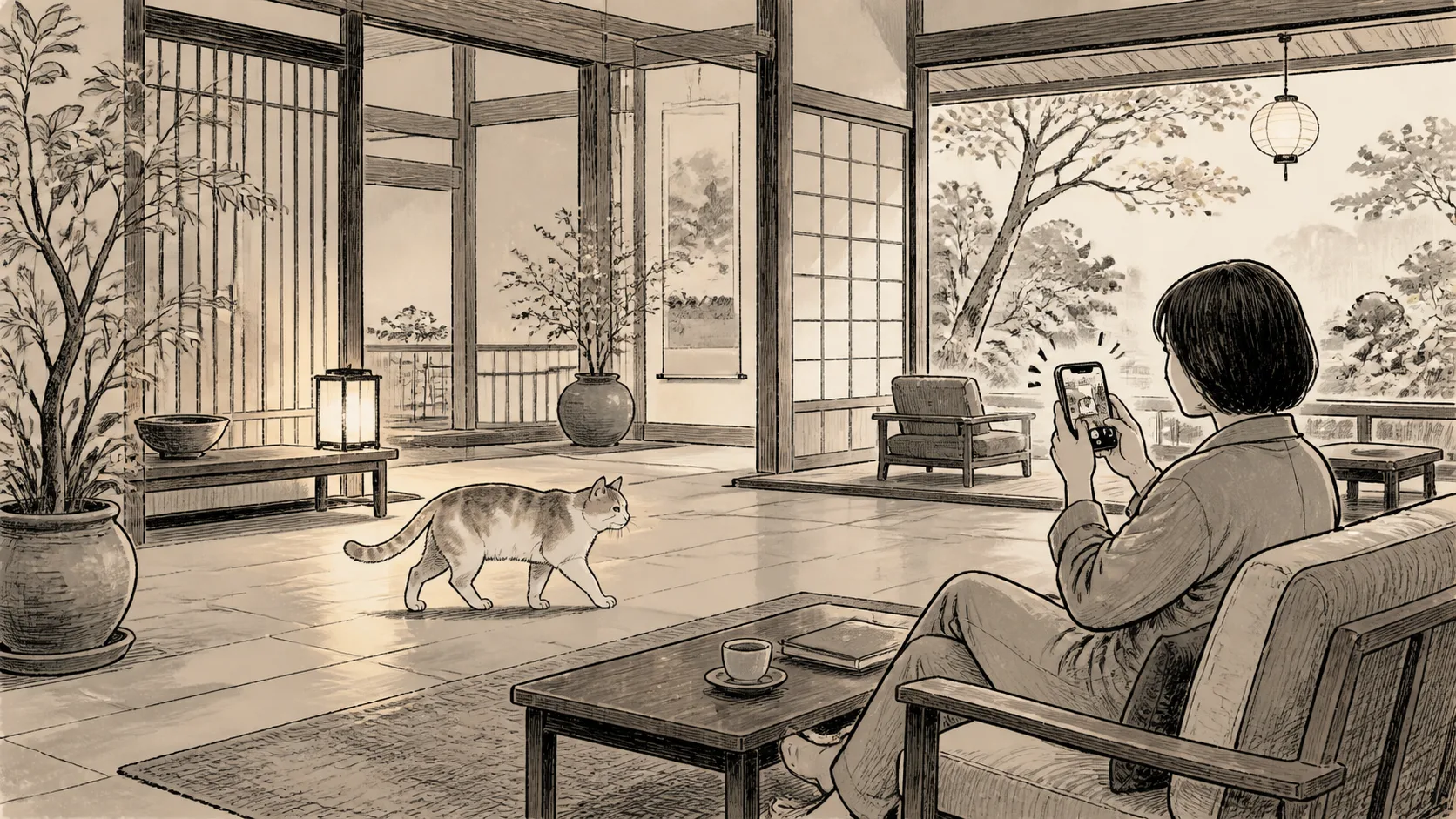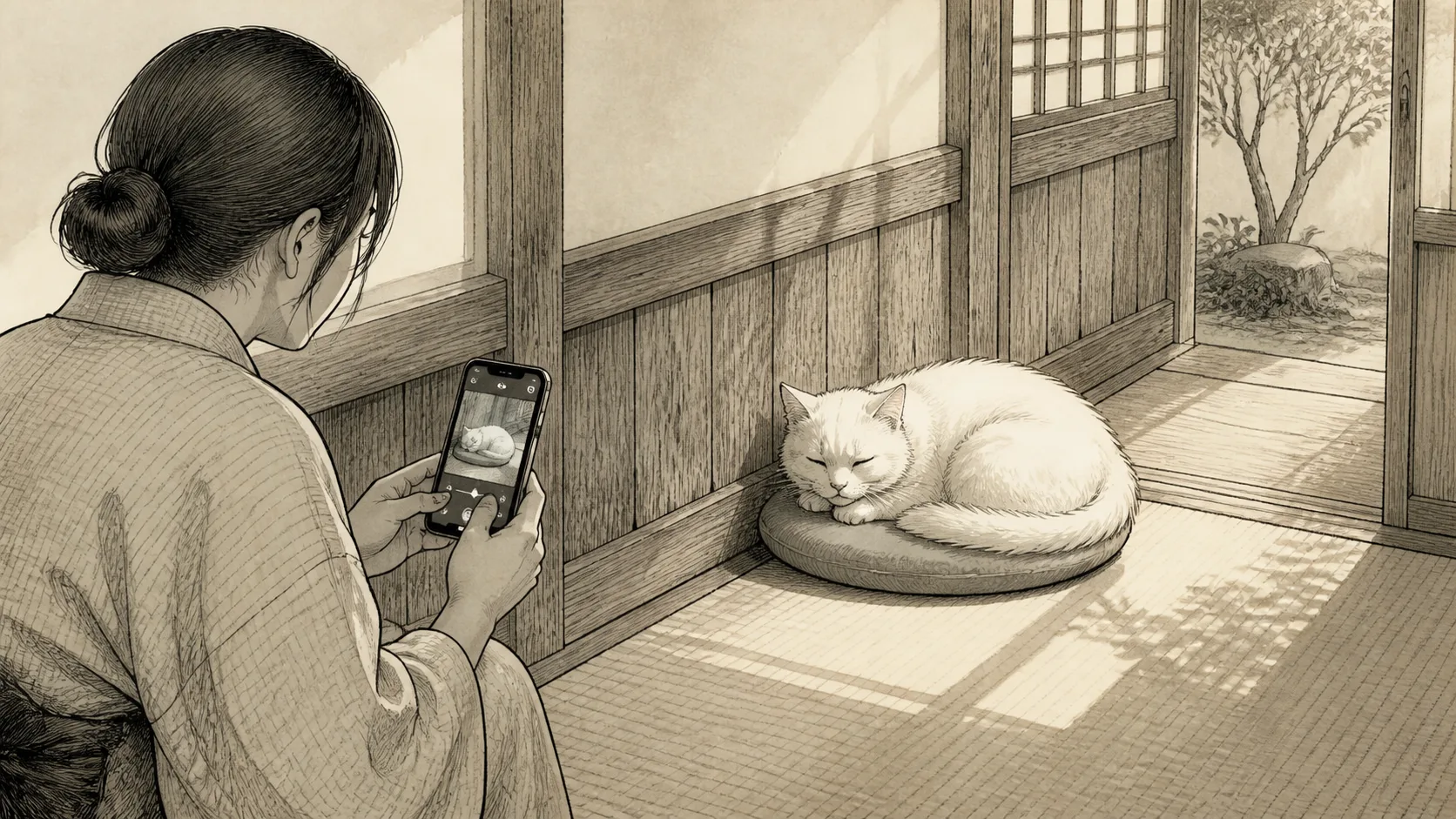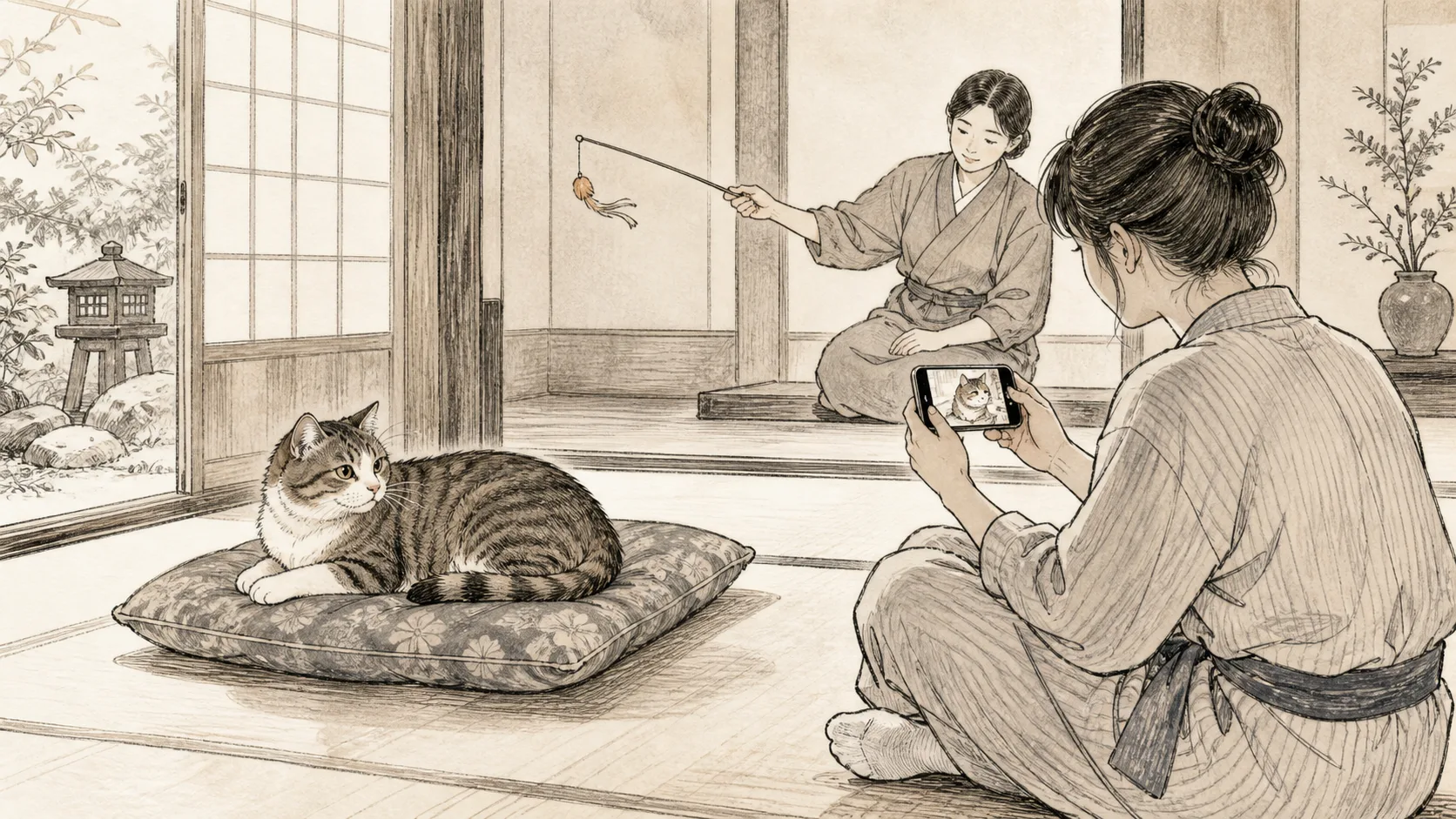
This article deals with how to get the right perspective when photographing resident cats at Nekoyado. Unlike cats at home, guests do not use sounds, treats, or toys without permission; they follow the decisions of the inn managing the cat.
Looking at the camera is not a necessary condition for photos. Capture the moment when the cat naturally looks at you, or leave a side view or back view.
- Check with the inn before calling your name
- Do not use snacks and toys as photo props
- Don’t point your smartphone directly at your face
- Capture short moments of the cat
- The profile and line of sight also make for a cat inn-like photo.
- Avoid making eye contact with multiple people
- Checklist for eye-level photography
- Summary
- Reference materials
Check with the inn before calling your name
Some cats are used to having their name called, while others are taking a break. Only when a staff member indicates that it is okay to call, listen to the usual way of calling and the volume, and if there is no response, the call ends.
Avoid clicking your tongue, clapping your hands, playing chirps from your smartphone, and tapping the floor. It affects the quietness of the common areas and other guests.
Do not use snacks and toys as photo props
I will not use the snacks, matatabi, or cat treats I brought with me. Due to dietary restrictions, medication, accidental ingestion, and competition between cats, Rules for treats and toys will be prioritized.
Even when the staff handles the toys provided by the inn, playtime for the cats takes center stage. Do not shake the cat right next to the lens, make him repeat the same position, or allow other cats to get in his way.
Don’t point your smartphone directly at your face
To get the cat’s perspective, bringing your smartphone close to your face may block the cat’s escape route. Sit far away, hold your phone near your chest, and wait for the cat to happen to look at you.
Don’t stare directly at it; instead, alternately check the screen and your surroundings. If the cat looks away, don’t try to get it to look at you again.
Capture short moments of the cat
Cats may look up at the sound of staff walking, the door, or outside the window. Use a device that allows short bursts, or take just one photo. Do not make sounds aimed at a startled reaction.
Don’t judge just by looking at the photo that the size of the pupils or the direction of the ears indicates “happiness.” We will look at your whole body and your actions before and after the shooting, and if you feel nervous, we will stop.
The profile and line of sight also make for a cat inn-like photo.
The cat’s profile looking out the window, seeing off the staff, and back looking down the hallway reflect the cat’s daily life at the inn. It’s not a failure even if you can’t direct your eyes to the lens.
Leave a blank space ahead of the cat’s line of sight and include the porch or inside the inn in the photo to convey the scene spent at the cat inn.
Avoid making eye contact with multiple people
Cats get restless when guests call their names from different directions. Leave the photographer alone and have your companion wait at a distance. After the photo is taken, do not let the cat move on to the next person, and give the cat time to rest.
Checklist for eye-level photography
- I asked the inn about the name and whether or not I could call out to them.
- Do not use sounds, snacks, or toys without permission.
- Do not bring your smartphone close to the cat’s face
- Can be finished with profile or back view
- Discontinue if there are any changes in the cat’s whole body.
Summary
The safest way to get the cats’ attention at the inn is to wait for a natural moment without forcing it. Check with the inn about sounds and toys, and choose a composition that conveys the cat’s daily life even when the cat’s eyes aren’t looking.
Reference materials
- 2022 AAFP/ISFM Cat Friendly Veterinary Interaction Guidelines
- Practical human–cat interaction guidelines
Note: Please give priority to the accommodation information regarding the cat’s name, toys, and photo shoot time.