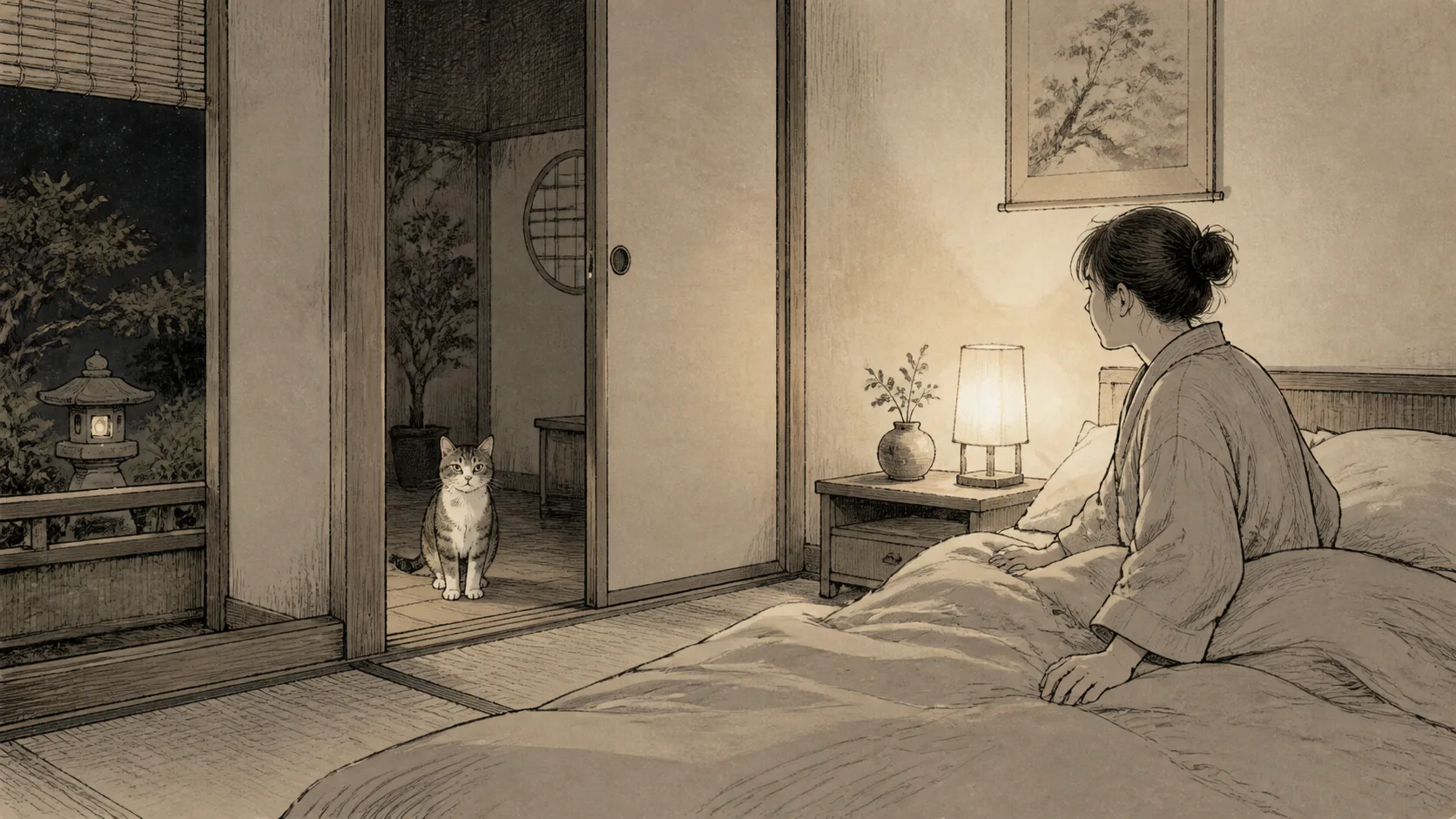
Guest-room visits at night are fascinating, but the darkness and sleepiness make it easy to overlook the cat’s whereabouts and small items. When checking in, ask if the inn allows overnight visits by resident cats or if you can leave the cat indoors to sleep.
Even though it is introduced as “an inn where cats come at night,” visits are not a nightly service. This will vary depending on the cat’s physical condition, mood, room, and accommodation situation on the day, so if the cat does not come, do not call and take a rest.
Things to ask when checking in
- Time period and target area when cats visit the guest room
- May the cat enter the room, and may I close the door?
- May I sleep while the resident cat remains in the room?
- Steps to take when the cat wants to come out
- How to contact the inn at night
Even in the same building, doors that lead to the outdoors and doors that lead only to inside the inn are treated differently. Check which doors guests are allowed to operate at the actual location.
Clean up before going to bed
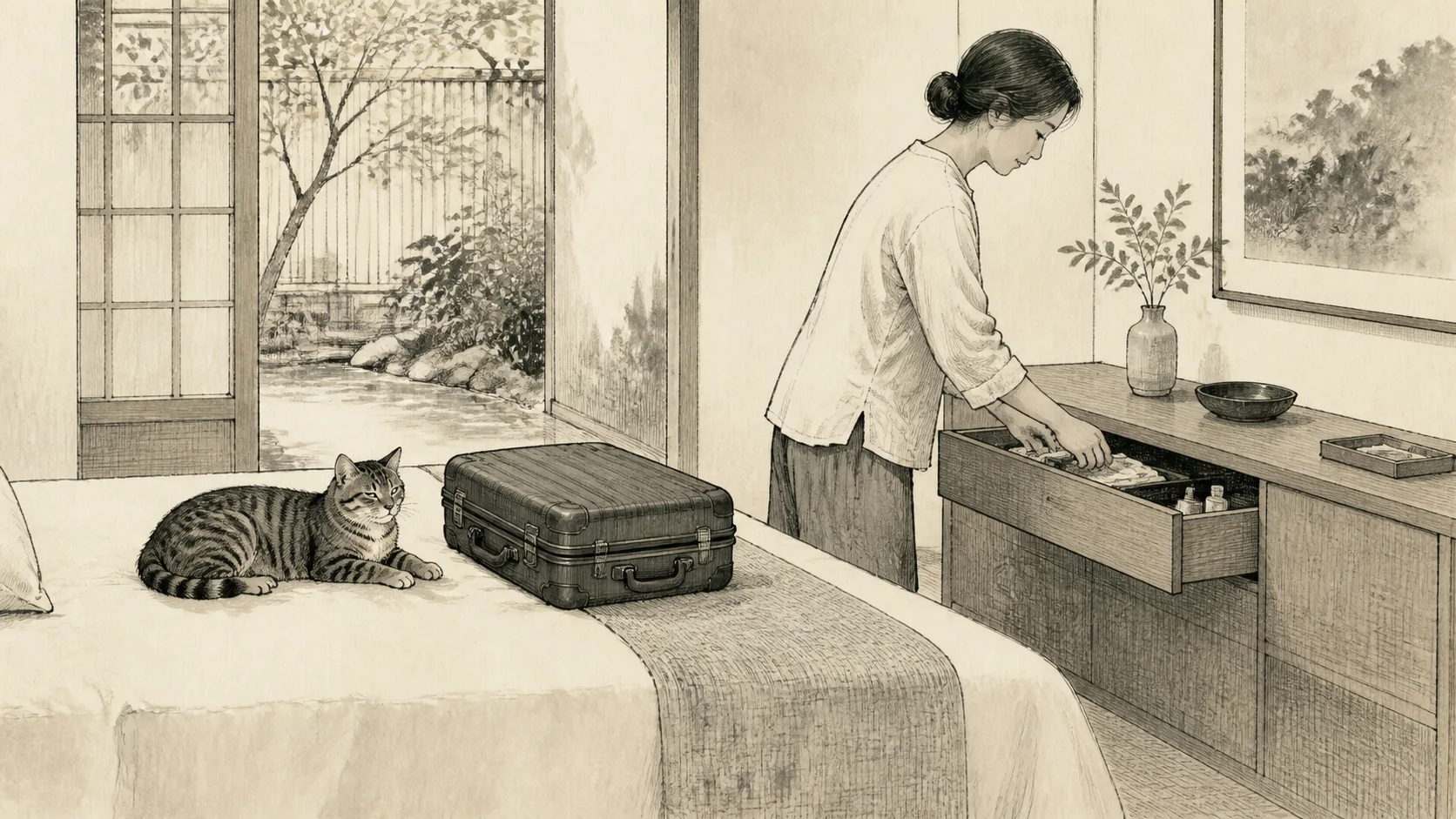
Store medicines, food and drinks, earphones, charging cables, hair ties, and plastic bags. Close the bathroom, trash can, and storage, and arrange the windows and balcony as per the inn’s instructions.
If you place your smartphone next to your bed, please make sure that the resident cat cannot chew on the charging cord.
Check the cat’s whereabouts
Before getting into the futon, visually check under the bed, inside the bedding, behind the curtains, in the bathroom, and in your bag. Do not shake the bedding too hard to scare the cat, and if you cannot find it, contact the staff.
Even if the cat is allowed to sleep in your bed, there are risks of rolling over and entering or exiting. Prioritize the accommodation’s description.
If you are concerned about sleeping in the same bedding as the cat, are a light sleeper, or have allergies, do not force yourself to do so. When making a reservation, ask if you can refuse cat visits or if there is a room that cats cannot enter.
When the cat wants to leave
If the cat looks at the door, meows, or goes back and forth, use the exit method you’ve heard beforehand. Do not open doors or windows leading to the outside at your own discretion, and do not carry the resident cat into the hallway in your arms.
It’s a good idea to ask first about nighttime contact information and when you can call the staff.
If you can’t find the cat, a window or outside door is open, there is a possibility that the cat has ingested a foreign object, or if you notice vomiting or injuries, contact the inn immediately instead of trying to handle it yourself. Do not chase the cat or put your hand in its mouth to check on it.
Prioritize safety over photos
Do not use flash or suddenly flash lights in a dark room. Avoid waking the cat to take pictures or inviting it into your bedding.
If it is difficult to take pictures at night, give up on recording and make sure there is enough brightness for the cat to move around safely.
Morning confirmation
After waking up, check the whereabouts of the cat, open the door, and close your luggage. Do not go to breakfast or check out while the cat remains in the room.
Please also check Guest-room Visit Basics before your trip.
Agree on the procedure with your companions
If one person lets the cat into the room while the other person is sleeping, it will be difficult to locate the cat. Decide in advance who will allow the cat into the room and who will monitor its whereabouts until it leaves, and if you will turn on the lights at night. Do not allow children to open and close the door by themselves.
If you are leaving early the next morning, you may decide to skip the evening visit. We prioritize not leaving cats indoors over time with the resident cat.
Response by situation at night
| Situation | Action |
|---|---|
| Resident cat waits at the entrance | Check the rules in advance to see if the cat may enter the room, and do not invite them without permission |
| Resident cat gets on the bed | Don’t suddenly move the bedding and check its whereabouts before sleeping |
| Resident cat looks at the door and meows | Do not open the outside door and use the designated exit method |
| Resident cat is hiding and I can’t find it | Don’t move the furniture and notify the nighttime contact |
| Possibility of ingesting a foreign object | Don’t chase the cat; tell the staff about the object, time, and location |
| Companion can’t sleep | Don’t force the cat out; ask staff to arrange for it to leave safely |
At lodgings that do not have nighttime staff, emergency contact information and regular consultation methods may differ. At check-in, please specifically ask under what conditions you can contact the inn even during the night.
Choice to decline night visit
If you have sleep disorders, allergies, small children, medications, or medical equipment, etc., and cannot safely manage the cat’s whereabouts, ask before making a reservation whether you can decline the cat entering. Even a room where cats cannot enter may not be completely free of allergens, so if you have any health concerns, please consult a healthcare professional.
Even if you choose an inn where cats are likely to visit, it is not rude to forego their visit on the day of the visit. If you overdo it, it can lead to dangerous actions such as suddenly ejecting the cat.
Summary
For night visits, three things are important: storage before bedtime, whereabouts of the cat, and how to leave. Don’t expect to be able to sleep with the resident cat, but prioritize the operation of the inn and the selection of the cat.
Note: Night visit availability and whether or not you can leave the cat in the guest room vary by inn.