A cat’s tail moves conspicuously, so it is often introduced as a clue to reading a cat’s feelings. However, it is not possible to determine one’s emotion or next action based on just one shape, such as “a raised tail means happiness” or “a moving tail means anger.”
In addition to the cat’s tail, we also look at its ears, eyes, muscle tension, direction of movement, surrounding sounds, and distance from people.
- First, look at the changes from a moment ago
- Approach with tail up
- The tail rests loosely beside the cat’s body or on the floor
- Only the tip of the tail moves
- Shake big and fast, hit the floor
- Lower the tail, put it under the body
- Fur stands on end
- When cats see each other
- Do not make a tail when taking pictures
- Combine with ears, eyes, and posture
- Summary
- Reference materials
First, look at the changes from a moment ago
Instead of cutting out a momentary shape like in a photo, look at what the cat is doing and how its tail has changed.
- A sleeping cat was woken up by a noise
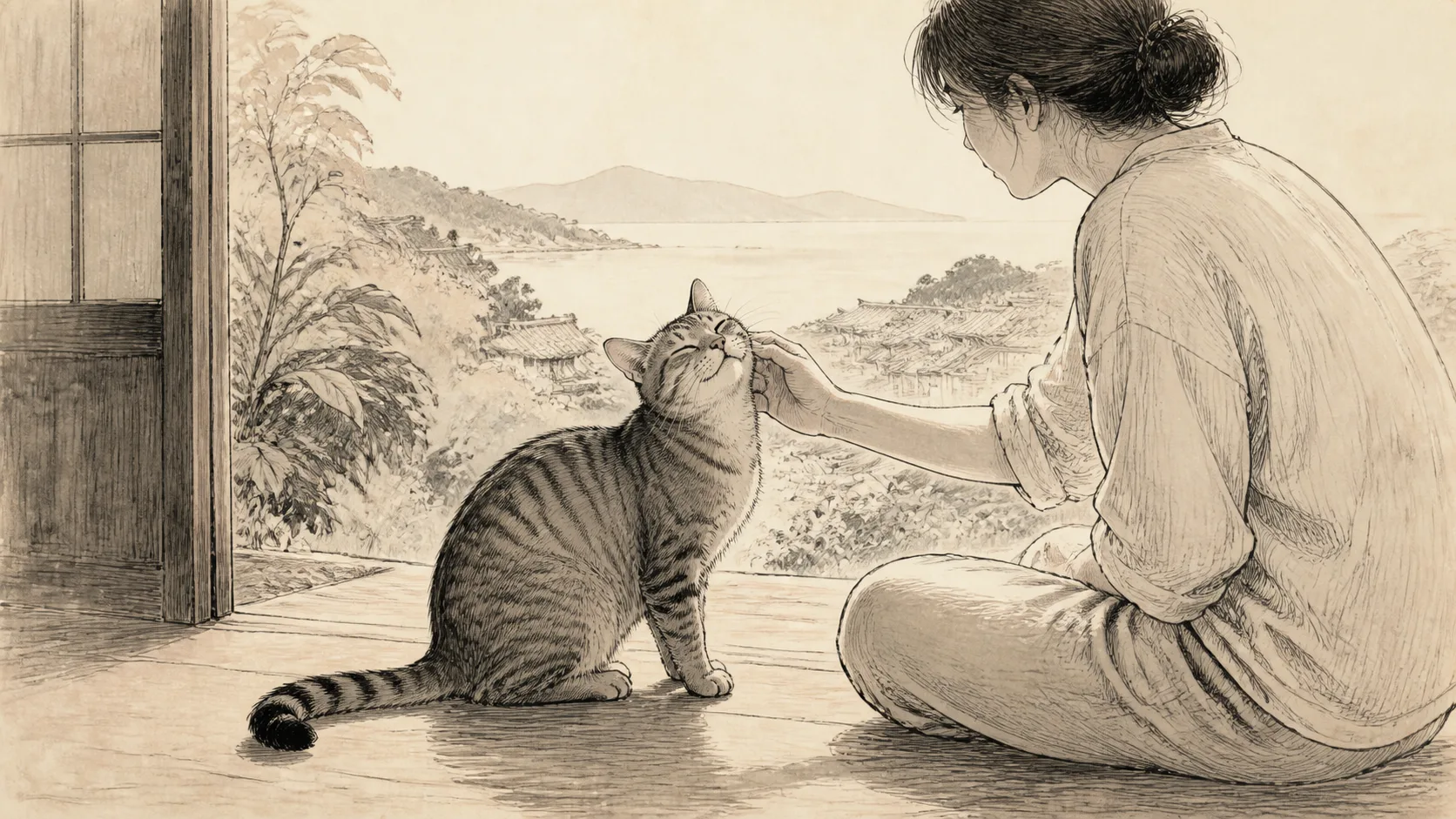
- The cat’s tail rises as it approaches a person.
- The tail moves faster during petting
- Another cat appears, and the first cat wraps its tail around its body.
- The tail lowers as the cat heads toward the exit.
If you know before and after the change, it will be easier to decide whether to continue contact or not.
Approach with tail up
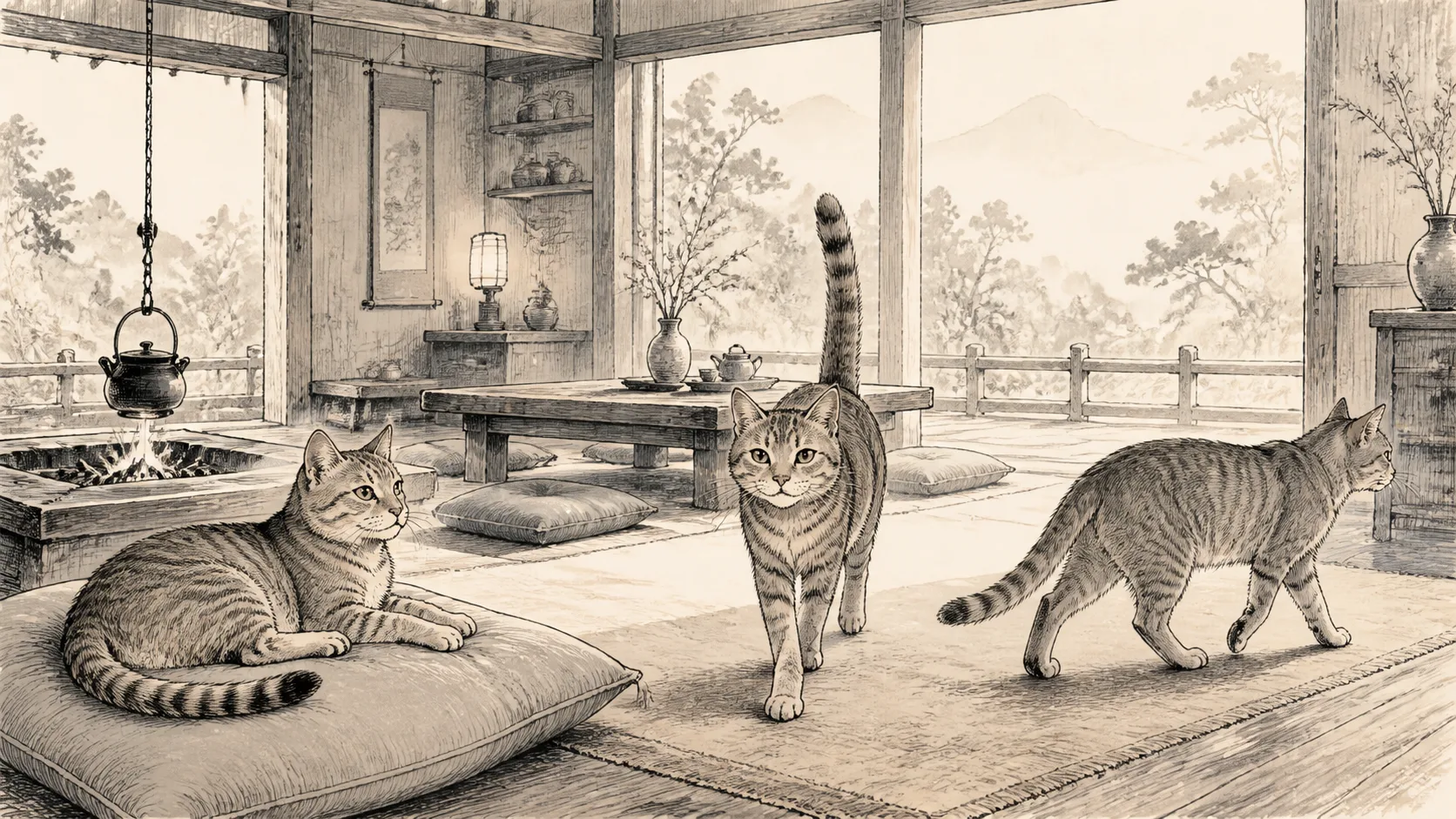
Cats approaching with their tails up may be observed in friendly situations between cats and people.Research on visual signs of cats also recorded that cats often raise their tails when approaching people.
However, just because the tail is standing up does not mean that you are allowed to hold him or touch his whole body. There is a possibility that the cat may walk past you, so clear your path and wait for the next move.
The tail rests loosely beside the cat’s body or on the floor
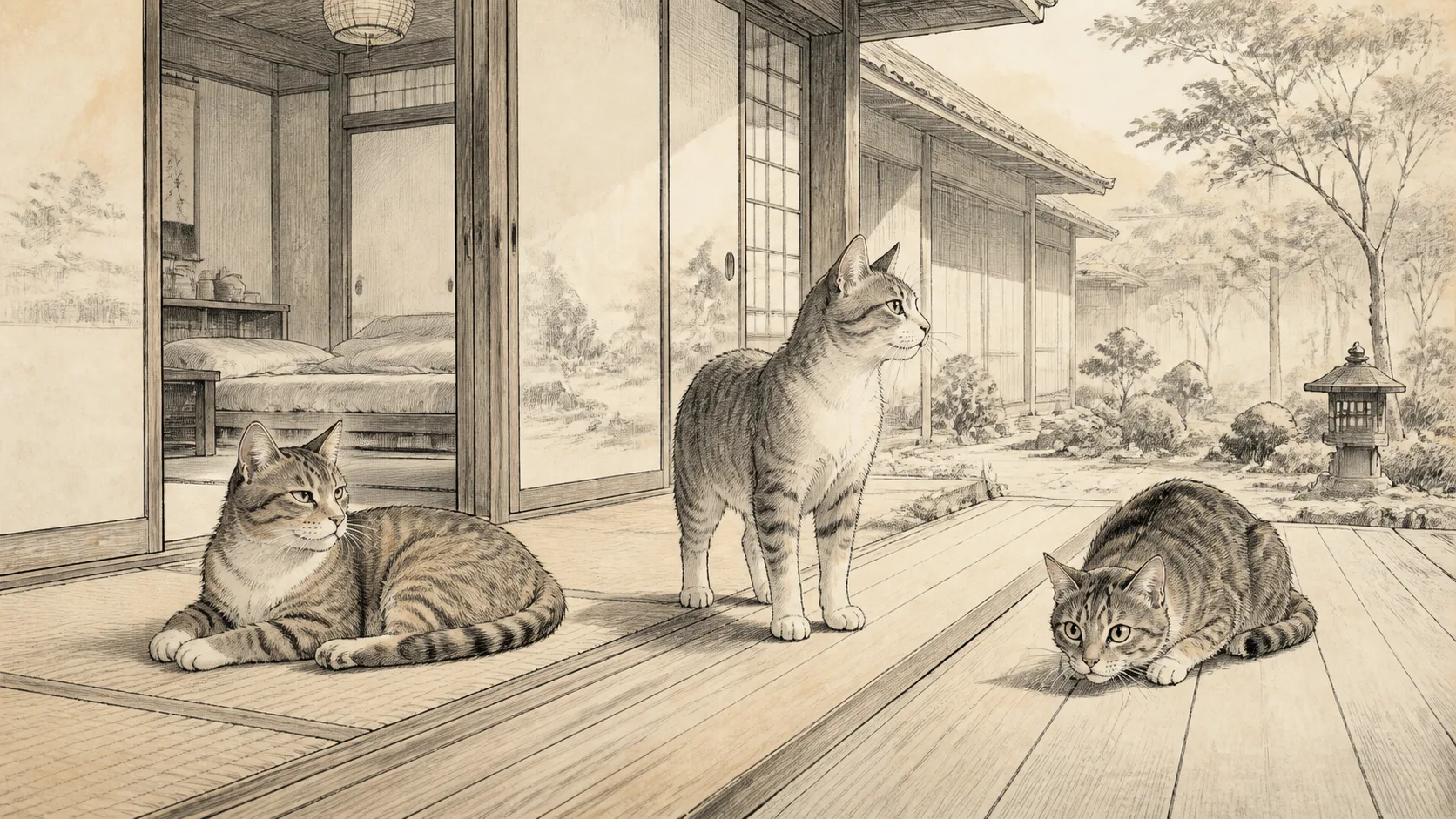
When a cat lies down, its tail is loosely placed next to its body or wrapped around its front paws, which may be a part of its calm rest if its entire body is soft.
On the other hand, if the cat’s body is low and stiff, its ears are set back, and its tail is tightly wrapped around its body while keeping an eye on its surroundings, this may be associated with anxiety or defensiveness. Even if the shape is the same, the muscle tension and environment are different.
Only the tip of the tail moves
Small movements of the tip can be seen in multiple situations, such as when paying attention to something, during play, and during stimulation during contact. Don’t immediately decide that the cat is in a bad mood; instead, watch to see if the cat moves more, looks at your hand, or turns away.
If you are in the middle of stroking, you can use it as a safe opportunity to stop. It ends if the cat does not ask for contact again.
Shake big and fast, hit the floor
If the cat’s tail suddenly makes larger, faster movements, it may be a sign of increased irritation or tension. Stop touching the cat. Do not test another body part or restrain it to investigate the cause.
If the cat turns its ears back, ripples its skin, turns back to look at your hand, or stiffens its body, you should distance yourself further. There is no need to wait until the cat refuses in a strong way.
Lower the tail, put it under the body
A low tail or curled-under body posture may be seen in situations of anxiety or fear. However, there are also natural positions while walking, body size, and individual differences.
If the cat is walking low toward an exit or hiding spot, clear the path. Do not call the cat’s name or try to bring it back with your hands or treats.
Fur stands on end
Fur on the tail or back standing on end may be associated with surprise or strong arousal. Rather than having guests judge whether the cat is scared or angry and approach the cat, it is better to increase the distance between the person and the cat and inform the staff of the situation.
Do not hold the position or recreate the cause for the purpose of taking a photo of the cat.
When cats see each other
At an inn with multiple cats, we do not judge the relationship based on one cat’s tail. Look at the distance from each other, line of sight, passageways, heights, eating utensils and bedding, and movements of the chasing and leaving sides.
Do not put your hands between the cats or pick them up for mediation, and if you are concerned, please let the hotel staff know. Guests are not aware of the normal relationship.
Do not make a tail when taking pictures
Avoid calling the cat back to take a picture of the cat’s tail standing up, stimulating it with toys or food, and touching and repositioning the cat’s tail.
Take pictures of natural movements from a sufficient distance, and end the picture when the cat moves away. Please check Photo Etiquette at Cat Inn.
Combine with ears, eyes, and posture
When looking at a tail, check at least the following four things at the same time.
- Are the cat’s ears facing forward, to the side, or to the back?
- Are the cat’s eyes following its surroundings or focusing on your hand?
- Is the body soft or low and hard?
- Does the cat approach, stay, or leave?
For more information, please see Cat Signs Read by Combining Ears, Eyes, and Posture.
Summary
The tail is an important clue, but it is not an indicator that translates the cat’s feelings into words. Combine changes from a moment ago, whole body, surroundings, direction of movement, and if in doubt, stop and allow the cat to move away.
Please also check Cat’s signs that you can touch them and signs that you should leave them alone.
Reference materials
- Heads and Tails: An Analysis of Visual Signals in Cats
- Recognising and assessing feline emotions
- 2021 AAHA/AAFP Feline Life Stage Guidelines
Note: This article is not intended to diagnose a cat’s emotions or health condition. Please inform the hotel staff of any unusual behavior.