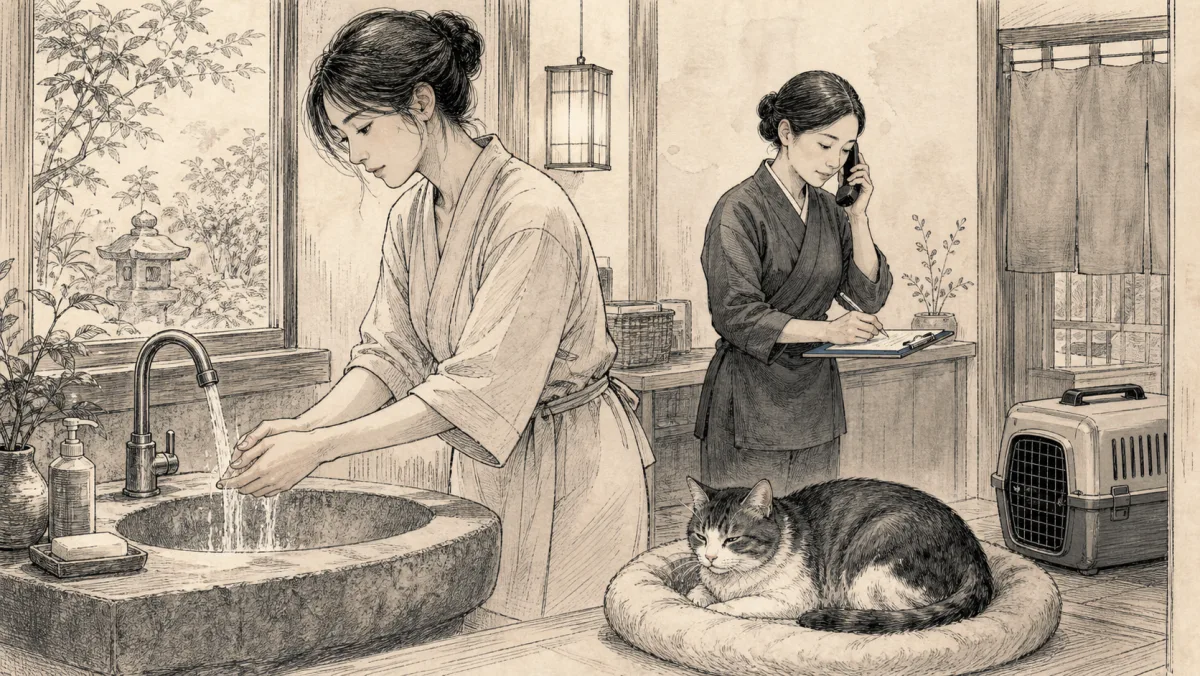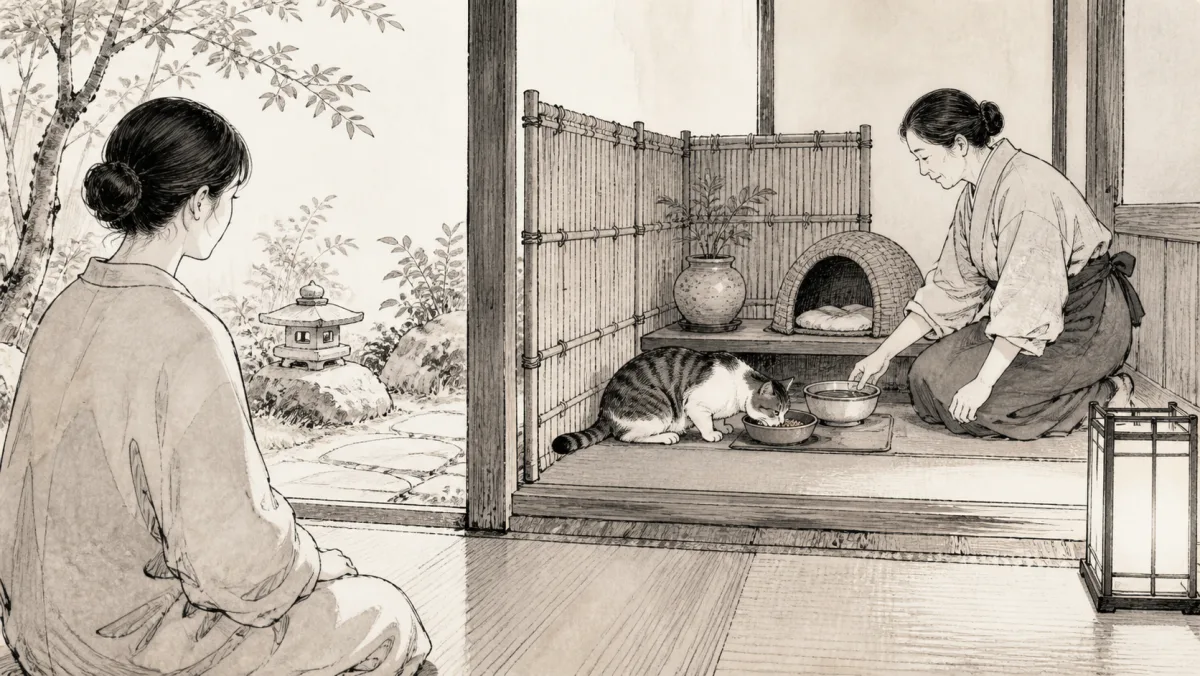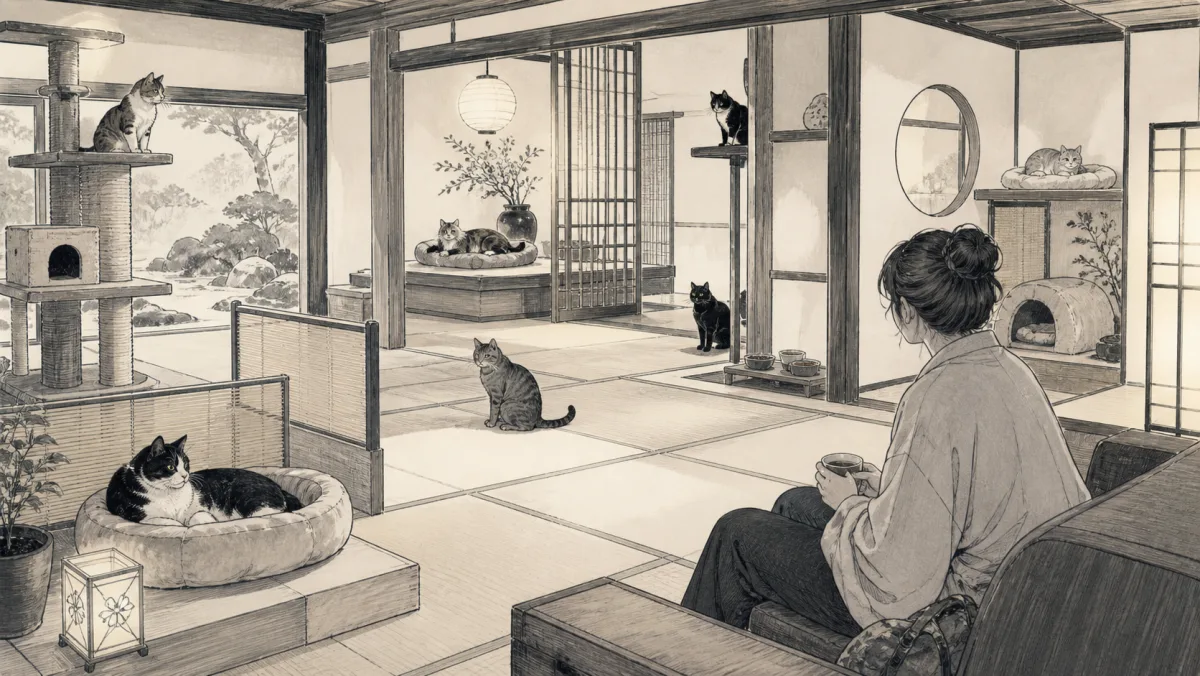
In a cat inn where many cats live, there are not only friendly cats who sleep side by side, but also cats who use the same space but keep their distance. Do not judge a relationship based solely on chasing or intimidation, and pay attention to quiet tensions.
- Even if they look like they are getting along, they are not necessarily from the same group.
- Easy-to-understand signs of tension
- Also see the quiet sign
- Bed, food, water, and toilets are subject to competition.
- What guests can do is observe and communicate
- “Equal touch” is not the correct answer
- Observation check
- Records when communicating to staff
- Dangerous situations if guests intervene
- Don’t draw a conclusion based on just one scene
- Summary
- Related articles
- Reference materials
Even if they look like they are getting along, they are not necessarily from the same group.
Just because you are in the same guest room or on the same sofa, you cannot conclude that you are in a close relationship. Cats use resources at different times or rest in positions where they cannot see each other.
Guests should avoid bringing two cats close together to take a “friendship photo” or showing them treats at the same time to make them gather together.
Easy-to-understand signs of tension
Growling, hissing, hitting, chasing, and hair standing on end are easy signs to recognize. Do not separate the cats or pick them up in this situation. There is a risk of people being bitten or scratched.
Immediately notify the inn staff and the person will move away from the aisle.
Also see the quiet sign
The 2024 Cat Tension Guidelines also include staring, walking away, hiding, and blocking access to walkways and resources.
If one cat always refuses to get down from a high place, another cat watches when it approaches the dish, or a cat sits in the walkway leading to the bathroom, guests won’t assume it’s playtime.
Bed, food, water, and toilets are subject to competition.
It is important that each cat or social group of cats has separate safe areas, food, water, litter box, scratching pads, etc. Guests will not move their dishes or bedding to a “photogenic location.”
Concentrating multiple cats on one tease or treat can increase tension.
What guests can do is observe and communicate
If it is necessary to block the cats’ line of sight, this will be done under the management of the inn. Do not make decisions about placing cushions, closing the door, or moving the cat to another room.
If you see someone chasing someone, blocking an aisle, or not being able to eat when the staff aren’t looking, calmly tell them the location and time. I will not allow the situation to continue as I will be taking a video.
“Equal touch” is not the correct answer
Just because you pet one animal, you don’t need to pet all the heads in the same way. We respect each cat’s choice, whether they want to approach or leave. Avoid the idea of inviting cautious cats to serve you fairly.
Observation check
- Do they stare at each other for too long?
- Is one animal blocking the aisle or stairs?
- Is there a cat that can’t reach the dishes or toilet?
- Is there a cat that hides, freezes, or hurries away?
- Are guests gathering cats together for snacks or taking photos?
Records when communicating to staff
Do not judge them by saying they don’t get along well or are bullying, but instead tell them what you see.
Around 8 PM, a brown cat sat in the hallway at the entrance of the dining room, and a white cat approached but then turned back. I saw this happen twice.
If you tell them the time, location, characteristics of the cats, which one was there first, and whether they are near food, water, toilets, etc., it will be easier for the inn to determine if the situation is different from usual. Since we are filming a video, we will not be able to recreate the situation, and will only show it to the inn if it has already been filmed.
Dangerous situations if guests intervene
| Scene | Things to avoid |
|---|---|
| They stare at each other and freeze | Put their hands and faces in between |
| The chase begins | Pick up the cat and separate it |
| Multiple cats gather in front of the food bowl | Add food to distribute it evenly |
| One hides | Invite outside for photo shoot |
| Loud voices or blows | Scolding or catching yourself |
If there is a risk of attack or injury to others, keep your distance, ask other guests to stay away, and notify staff immediately. Guests do not diagnose the relationship or treatment between cats.
Don’t draw a conclusion based on just one scene
You can’t tell whether it’s play or stress just by looking at one scene of them running, crying, or being in the same place. The host continuously observes changes in daily relationships, eating, toileting, and rest. Travelers remain in the role of sharing clues about the anomaly.
Summary
In a multi-cat house, signs of tension are not only flashy fights, but also stares, dodging, and blocked passages. Guests should not intervene, do not use resources, and should communicate the situation they have noticed to the staff.