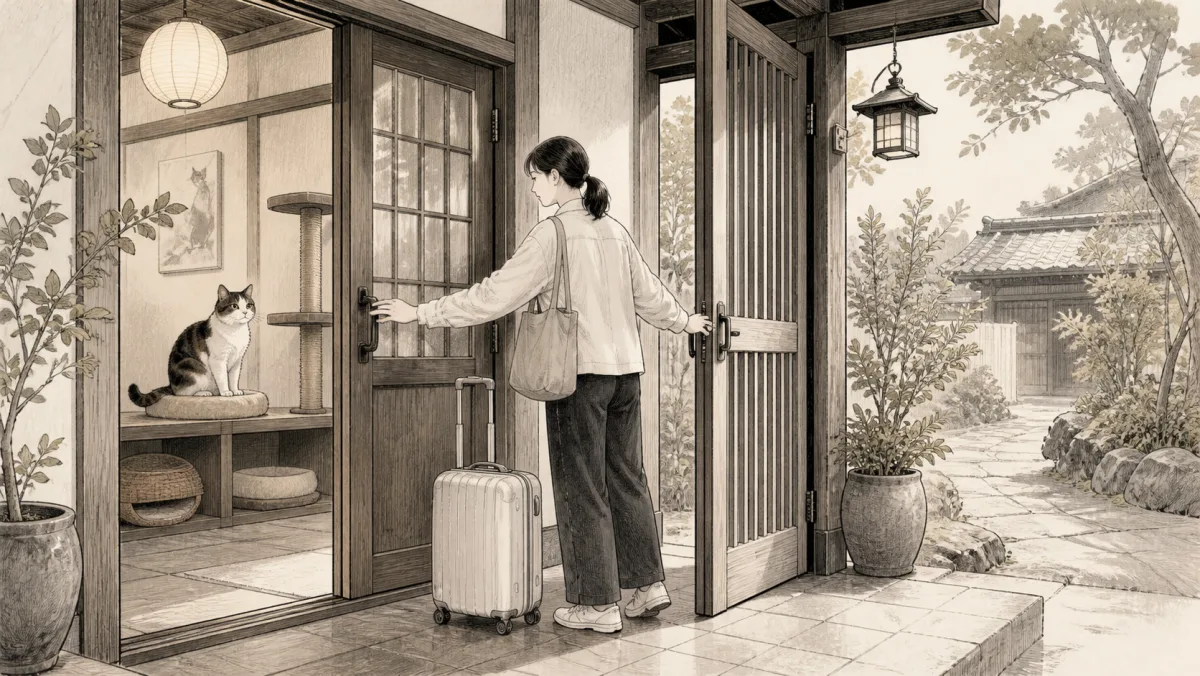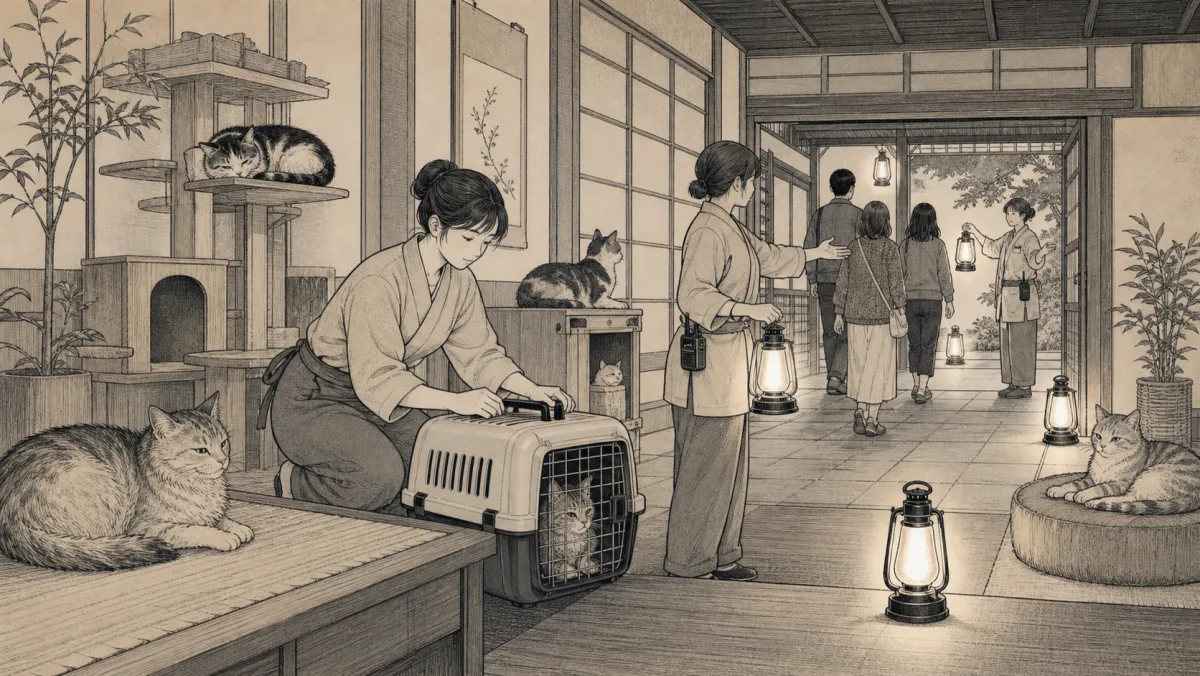
When a disaster or power outage occurs, guests may want to help resident cats. But the first thing to do is to ensure the safety of yourself and yourself and your companions. Cat evacuation, trapping, and door management follow the instructions of the inn staff, who are familiar with the cats’ personalities and facilities.
- First, ensure people’s safety
- Do not open the door unnecessarily during a power outage
- Don’t look for the cats
- Do not touch the inn carrier or stockpiles.
- The inn decides whether to take the cat to the shelter.
- Preparations you can make before staying
- Separate initial actions by disaster
- Be careful with the word “accompanied evacuation”
- Accept travel cancellation/early evacuation
- Summary
- Reference materials
First, ensure people’s safety
In an earthquake, protect your head and stay away from falling objects and broken glass. In the event of heavy rain or landslides, check the evacuation information of the inn and local government. In the event of a fire alarm, do not return to your room to search for your belongings or cats, but instead evacuate using the designated route.
If you lose your own safety, it will also hinder the inn’s evacuation efforts.
Do not open the door unnecessarily during a power outage
Inside the inn is dark, making it difficult to see cats even if they are near your feet or the door. Point your smartphone’s light toward the floor, don’t call for the cat loudly, and don’t open the front door, window, or guest room door on your own.
Do not use the elevator and follow the emergency lighting and instructions at the inn. Save your phone battery and prioritize essential communications.
Don’t look for the cats
During a disaster, cats may hide in different places than usual. Reaching under furniture, trying to evacuate by holding the cat, or opening the cat carrier without permission can lead to injury or escape for both humans and cats.
Tell the staff the location and time of the cat you saw and leave it to them to catch it.
Do not touch the inn carrier or stockpiles.
The carrier, cage, food, water, medicine, and records for each cat provided by the inn are part of the evacuation plan. Guests do not move locations or swap cats.
Do not give human emergency rations to cats, and only help when requested by the inn.
The inn decides whether to take the cat to the shelter.
The Ministry of the Environment advises pet owners to consider evacuating with their pets and making necessary preparations during normal times. The owner/manager of the resident cat is the inn, and guests cannot take them out on their own.
Some people at the shelter are afraid of animals or have allergies. Evacuation with others is not necessarily the same as spending time in the same space as others, so follow the instructions of the local government and facility.
Preparations you can make before staying
- Share your accommodation address and phone number with your family
- Receive municipal alerts and traffic information
- Carry a power bank and a small light
- Place your regular medications and ID in a place where you can easily take them with you.
- Check the evacuation route and emergency exit of the guest room
- Do not leave luggage in the hallway or cat room
Separate initial actions by disaster
| Situation | First thing to do | What not to do about cats |
|---|---|---|
| Earthquake | Protect your head and stay away from glass and furniture | Do not look for the cat during the shaking |
| Fire/Alarm | Evacuate immediately using the designated route | Do not return to your room for the cat and luggage |
| Heavy rain and landslides | Check the evacuation guidance of your accommodation and local government | Do not continue moving to meet the cat |
| Power outage | Light your feet and close the door | Open the window for ventilation and exploration |
| Tsunami warning | Evacuate to a higher place as directed by your hotel | Search for cars and cats and delay evacuation |
Even if the inn staff cannot be found, we will prioritize human life by following emergency exit signs, inside the inn announcements, and local government evacuation information. The decision to take out a resident cat is made by the owner/manager of the inn.
Be careful with the word “accompanied evacuation”
The Ministry of the Environment’s term “accompanying evacuation” refers to the behavior of owners who safely evacuate their pets to evacuation sites, and does not guarantee that people and pets can stay in the same space at evacuation centers. In a cat inn, the host is the owner/manager, and there is no basis for the guest to take the cat out on their behalf.
If you are asked for information about a cat you saw after evacuating, provide the location, time, and appearance. Please prioritize contacting your accommodation and public institutions over taking photos or posting safety updates on SNS.
Accept travel cancellation/early evacuation
If a warning or traffic blockage is expected, do not continue moving just to see the cat. If the inn advises you to close, evacuate, or check out early, please follow them.
Even after a disaster, we wait for the inn’s official call instead of straining the lines and staff by making repeated phone calls to inquire about the safety of the cats.
Summary
The best thing for guests to do in the event of a disaster at a cat inn is to ensure everyone’s safety, do not open the door without permission, and tell the staff where the cat is. Turn your desire to help the cat into an action that follows the inn’s evacuation plan.