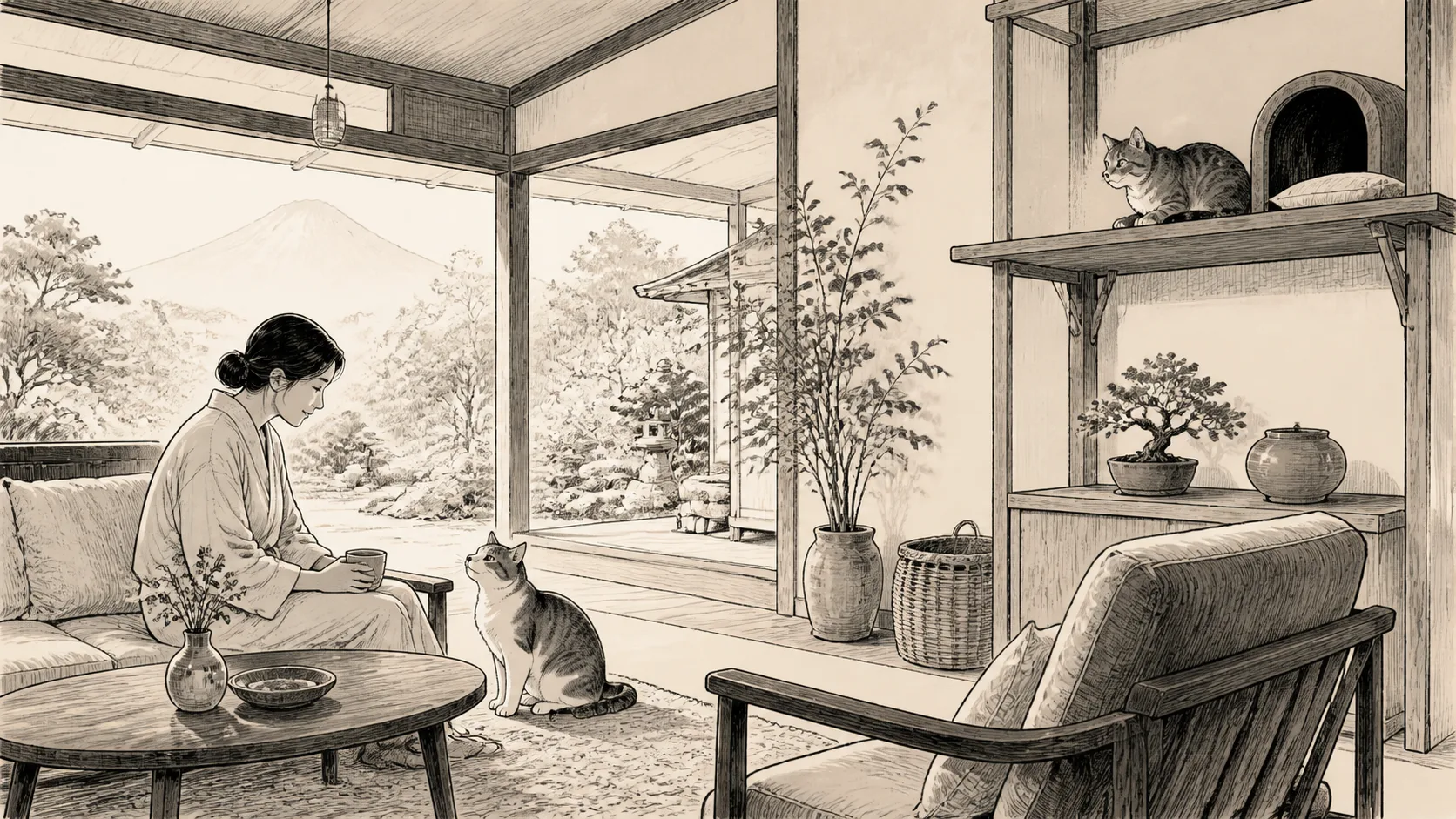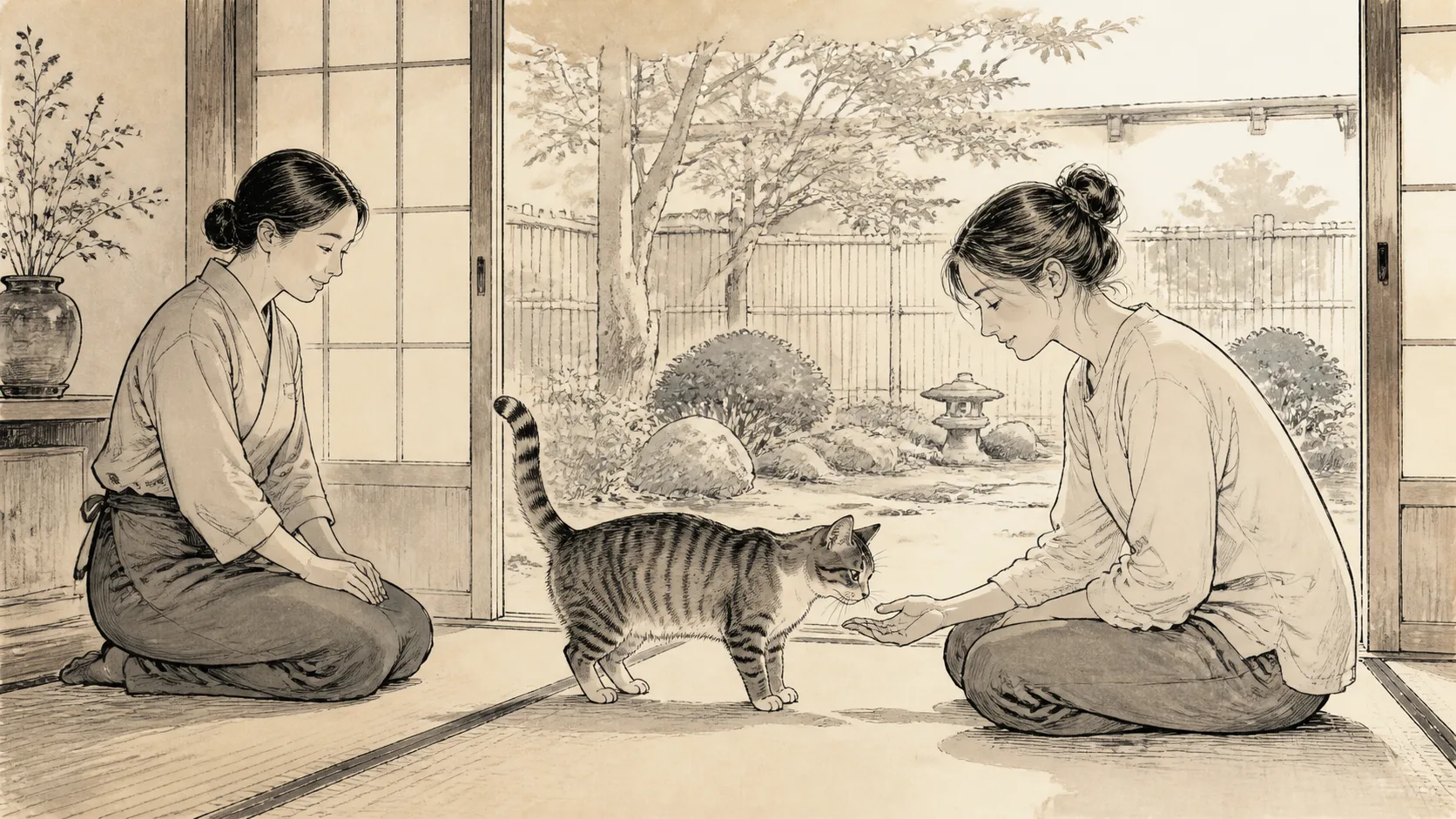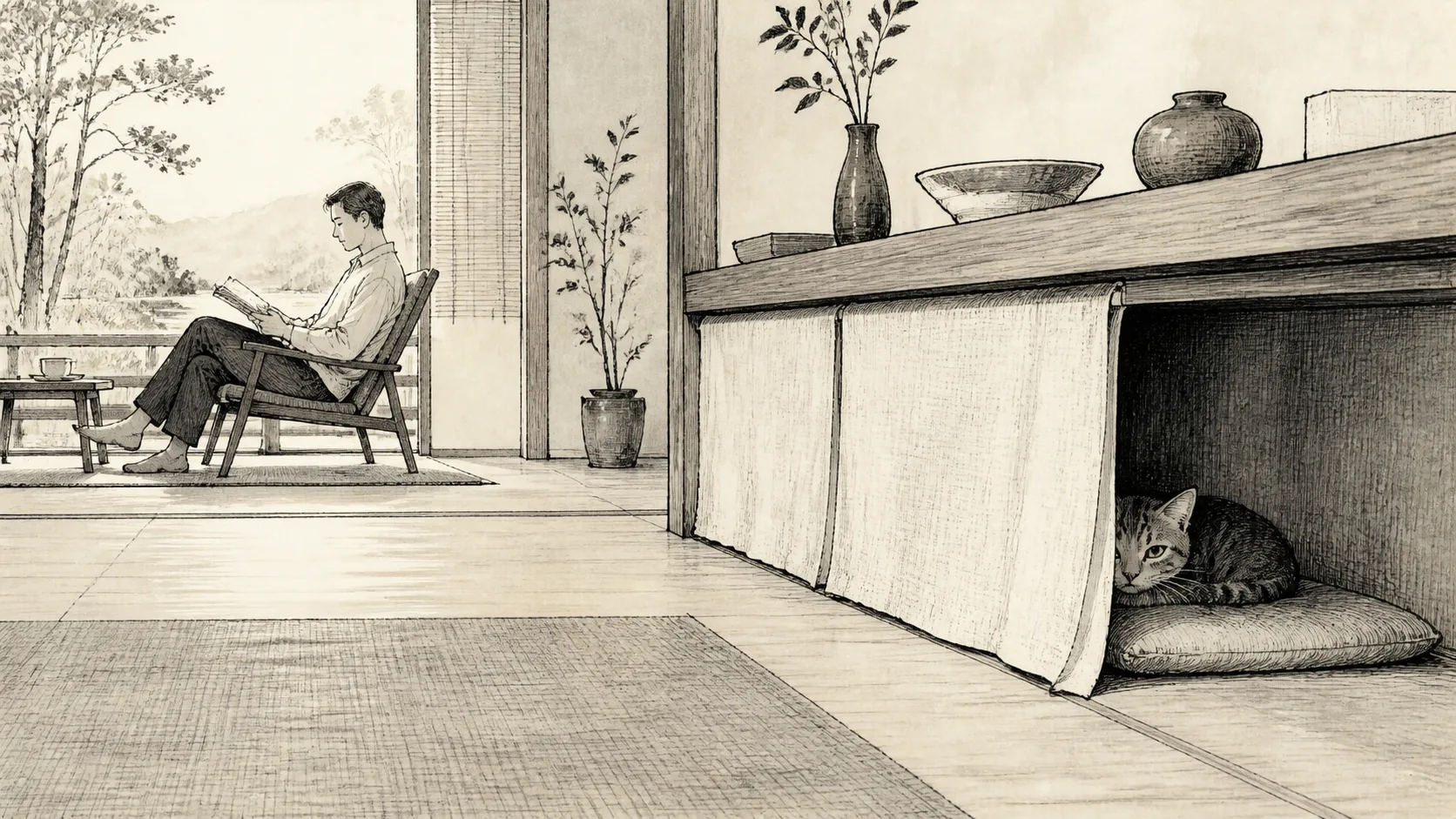
If a resident cat is hiding in a cat inn, you’ll want to check on it. However, a hiding place may be a safe zone for the cat to rest and adjust to its surroundings.
- Do not put your hands or camera inside
- Don’t invite the cat out
- Don’t wait in front of the exit
- Make the area around the hiding place quiet
- Do not judge your physical condition arbitrarily
- Situations to immediately tell the staff
- The days we couldn’t meet weren’t failures either.
- Summary
- Reference materials
Do not put your hands or camera inside
Do not insert your hands or smartphone under furniture, boxes, behind curtains, or cat beds. This can cause the cat to lose its escape route and lead to a strong defensive reaction.
Avoid flashes, lights, and peering into the camera to record video.
If the cat’s hiding place is in the guest room and you need to check on the cat’s whereabouts, do not move furniture or grope for it; call for staff. Allow people who know the cat to check it out in a safe way.
Don’t invite the cat out
Treats, teases, sounds, and names won’t get the cat out of its hiding place.Cats Protection also recommends leaving hidden cats alone until they feel safe and let themselves out.
Even if the inn staff advises you of the socializing time, we will give priority to the option where the cat hides that day.
Don’t wait in front of the exit
Avoid sitting in front of the hiding place, surrounding it with multiple people, and keeping watch until it comes out. Clear the aisle and continue your normal stay elsewhere.
If a cat comes out, do not touch it immediately, but wait until it passes or approaches.
Make the area around the hiding place quiet
Reduce opening and closing of doors, moving luggage, and conversations in large groups, leaving multiple paths for the cat to choose from. You don’t have to keep talking to the cat to try to reassure him. It is better to remain quiet as usual, which will reduce the amount of attention the cat will receive.
Tell your child specifically that they will not enter the secret base even if they find it. When a cat comes out, do not make a loud noise to alert the cat and keep a distance from the adult.
Do not judge your physical condition arbitrarily
Hiding is a natural behavior, but if it lasts longer than usual or if there are changes in eating or excretion, it could be a sign of a health problem. Since guests don’t know what happens normally, tell the staff when and where you saw it and do not touch it to confirm.
Situations to immediately tell the staff
- The cat may have entered storage, a bathroom, or a space behind machinery where it could become trapped.
- Doors and windows leading outside were open.
- Vomiting, bleeding, abnormal breathing, movement to cover the legs is visible.
- May have ingested string, medicine, food, etc.
- I can’t confirm the cat’s whereabouts in the guest room even after the check-out time.
These are not to conclude that you are in danger because you are hiding, but rather to contact the inn to quickly confirm the situation. Don’t try to catch the cat, just tell them the location and time.
The days we couldn’t meet weren’t failures either.
The purpose of a cat inn is not for tourists to release hidden cats. We will switch to ways of enjoying things that don’t put a burden on cats, such as introducing common areas, hearing about cat personalities from the innkeepers, photos, and exhibits inside the inn.
Summary
The best way to deal with a hidden cat is to create a space where they can do nothing. Don’t peek at them, don’t invite them, leave the exit open, and only tell the staff if you’re concerned.
Please also see the idea of When I couldn’t meet resident cat.
Reference materials
Note: Please do not diagnose the cat’s condition and report any unusual changes to the inn staff.