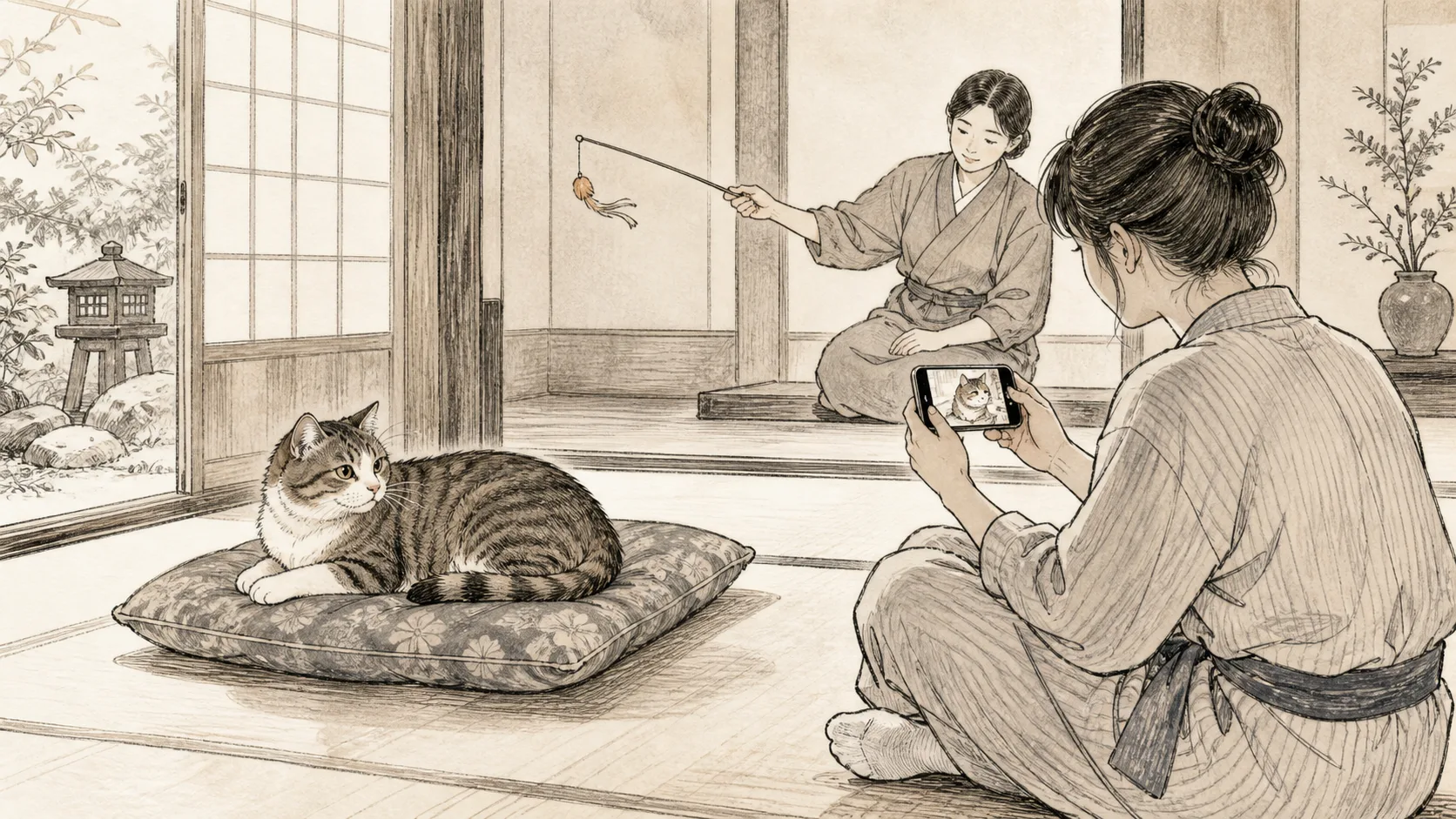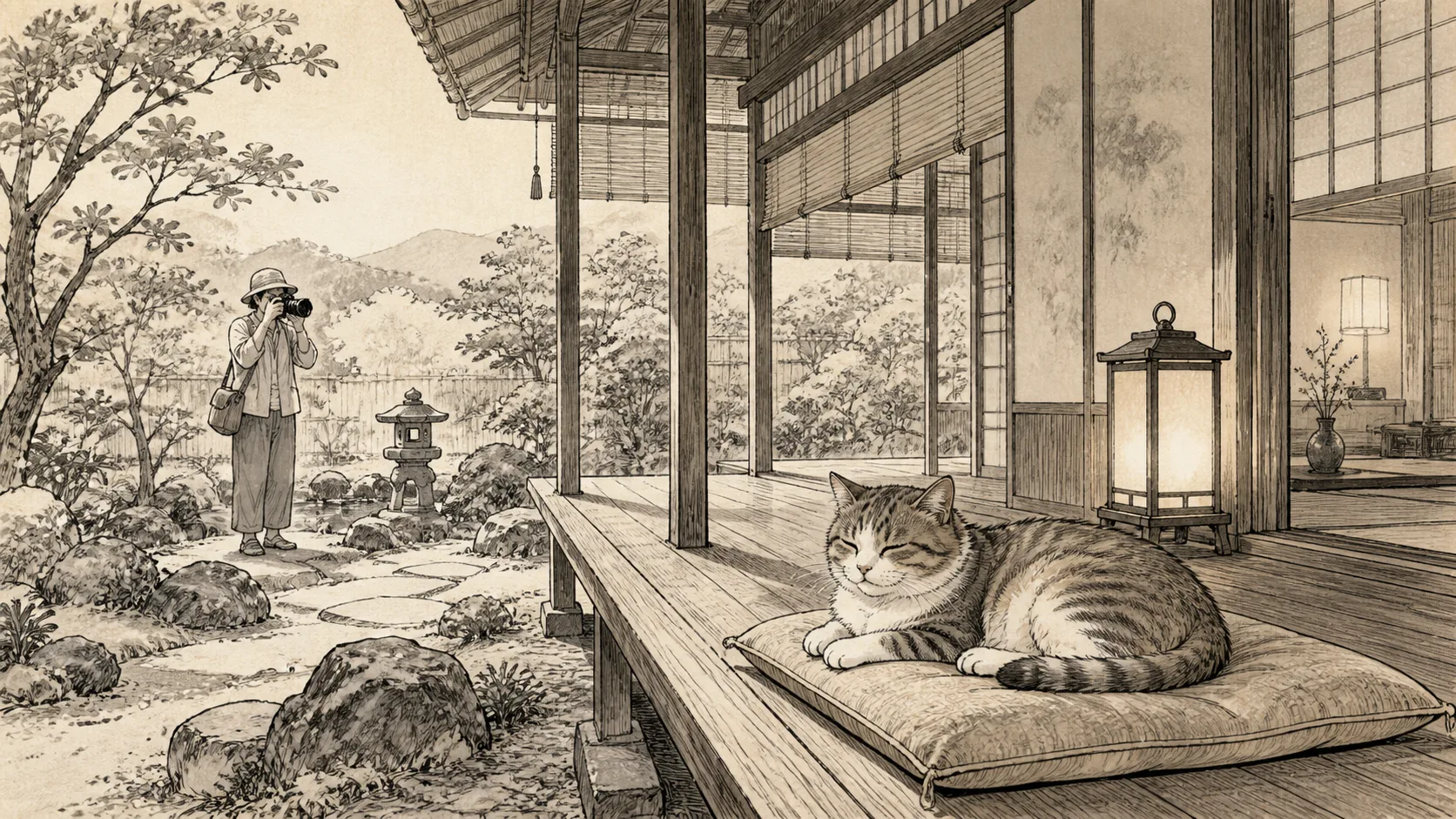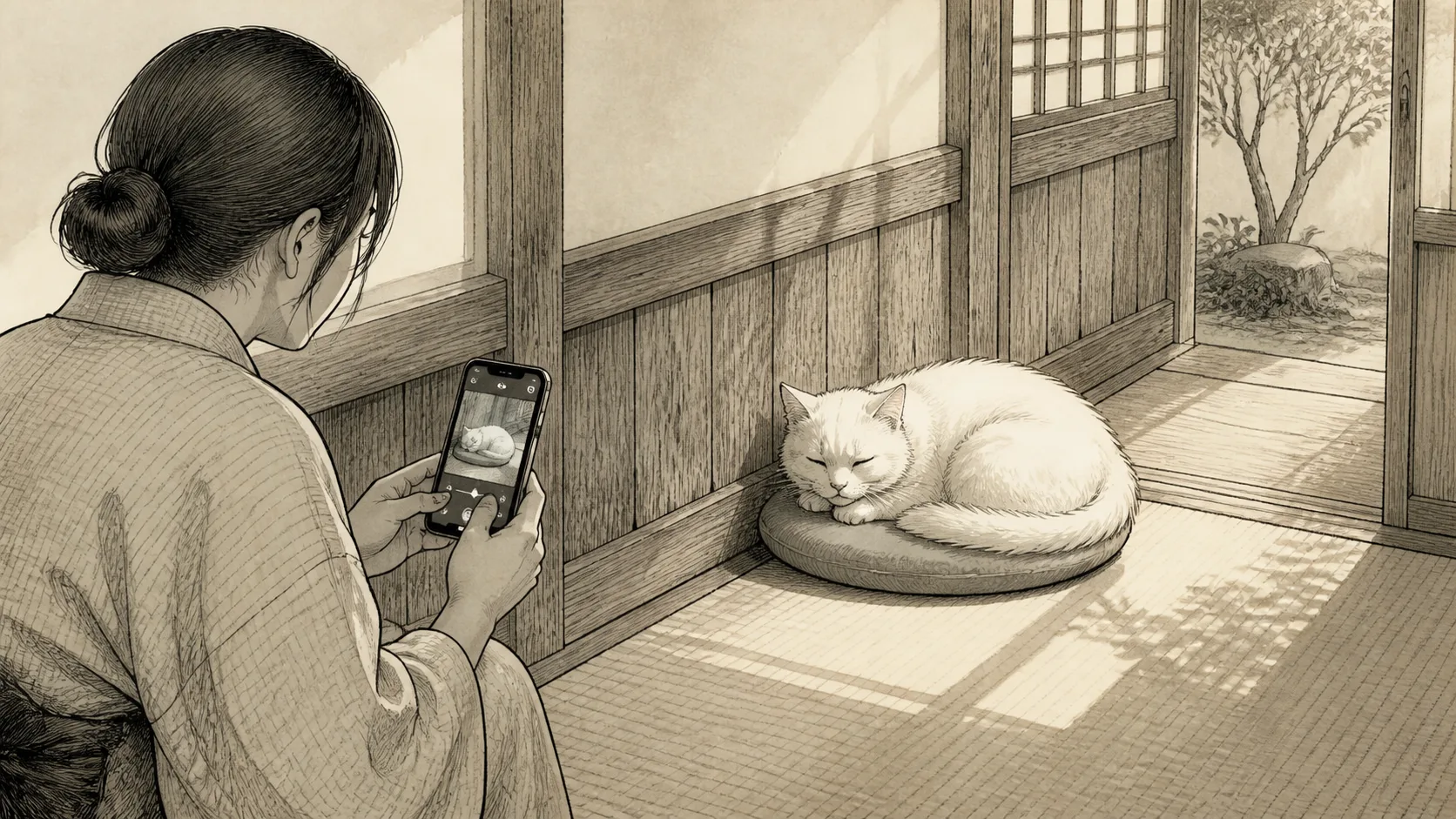
This article explains the etiquette for taking photos when the resident cat is sleeping in the cat’s bed or inside the inn. Do not wake, touch, or peer into the cat’s face to photograph it sleeping. Prioritize the cat’s rest over the photo.
Sleeping cats look easy to photograph because they don’t move, but this is when cats take a break from interacting with guests. Check if the bed is suitable for photography, and finish quickly from a distance.
- Consider photography prohibited at the cat’s resting place.
- Do not use flash, light, or voice
- Take just one photo away from the bed
- Do not wait for the cat to turn over or wake up
- Share the tranquility with other guests
- Do not judge a cat’s health from its sleeping posture
- Scenes that should not be photographed
- Judgment table for canceling filming
- How to keep your distance
- Summary
- Reference materials
Consider photography prohibited at the cat’s resting place.
Do not enter areas designated as resting areas by the inn, such as staff-only areas, cages, boxes, high places, and cat beds. Even if it is visible from common areas where photography is possible, please check with the staff.
If the cat sleeps in the guest room bed, the guest room visit rules and exit procedures take precedence. Do not close the door or prolong the cat’s stay to photograph it sleeping.
Do not use flash, light, or voice
Do not use flash, auxiliary light, or flashlights, and do not call names, snap fingers, or make noises. A photo that makes the cat open its eyes is not a photo taken without waking the cat.
If it is too dark to take a picture, exit without adding brightness. The idea behind shooting inside the inn in the dark is also the same.
Take just one photo away from the bed
Keep your smartphone away from the cat’s face and take the photo from a normal aisle or seat. Even if the image quality decreases when zooming, don’t use it as a reason to close the distance. Take a wide photo and crop it later.
If you keep crouching in front of the cat’s bed, you will block the exit when the cat wakes up. We will vacate the area immediately after shooting.
Do not wait for the cat to turn over or wake up
Even if you can’t see the face or it’s curled up, leave a picture of it. Avoid waiting until the cat raises its head, walking around the bed to find an angle, or moving the fabric or cushions.
Even if the cat opens its eyes, stop taking photos, lower your phone, and observe its reaction. If the cat wakes and leaves, do not follow it.
Share the tranquility with other guests
If you find a sleeping cat, do not call loudly to your companions or gather around it. Let only one person take a photo, and avoid continuing to take turns.
When posting in real time to SNS, people may gather in the same place. Please check the inn’s policy for posts that tell you the location and time.
Do not judge a cat’s health from its sleeping posture
Do not judge whether a cat is healthy or unwell from its sleeping time or posture alone. If you notice anything that concerns you, such as breathing abnormalities, vomiting, or injuries, don’t keep taking pictures and tell the staff the location and time.
Scenes that should not be photographed
- Being in a restricted area or hiding place for cats
- Time for medication, meals, and cleaning.
- The inn has given cautions about kittens, senior cats, or cats receiving medical care
- The photographer blocks the bed and hallway
- You can’t take pictures without adding light and sound
Judgment table for canceling filming
| Situation | Judgment |
|---|---|
| Cat opens its eyes and moves its ears | Stops getting any closer and finishes filming |
| Bed is close to non-public area | No photography |
| Other guests are resting | Don’t take pictures of the entire space, not just the cat |
| It’s dark and I need a flash | I give up on taking pictures |
| Cat changes position and hides | Does not change angle to follow |
| The cat’s breathing or posture looks concerning | Convey the facts to the staff without taking pictures |
How to keep your distance
Even if you can use zoom, do not keep pointing the camera at it for long periods of time. From a position that does not block the passage, check the silent mode, take a photo, and do not remain in the spot to check the screen.
Rather than waking the cat because you couldn’t take a good photo, choosing to bring home just the memory of the cat sleeping will protect the cat’s rest.
Summary
At a cat inn, the basic rule is to take just one photo from an allowed location, keeping your distance from the sleeping cat. Rather than seeing the cat’s face, cherish the fact that the cat was able to sleep peacefully.
Reference materials
Note: Resting places and whether or not you can take photos vary depending on the inn.