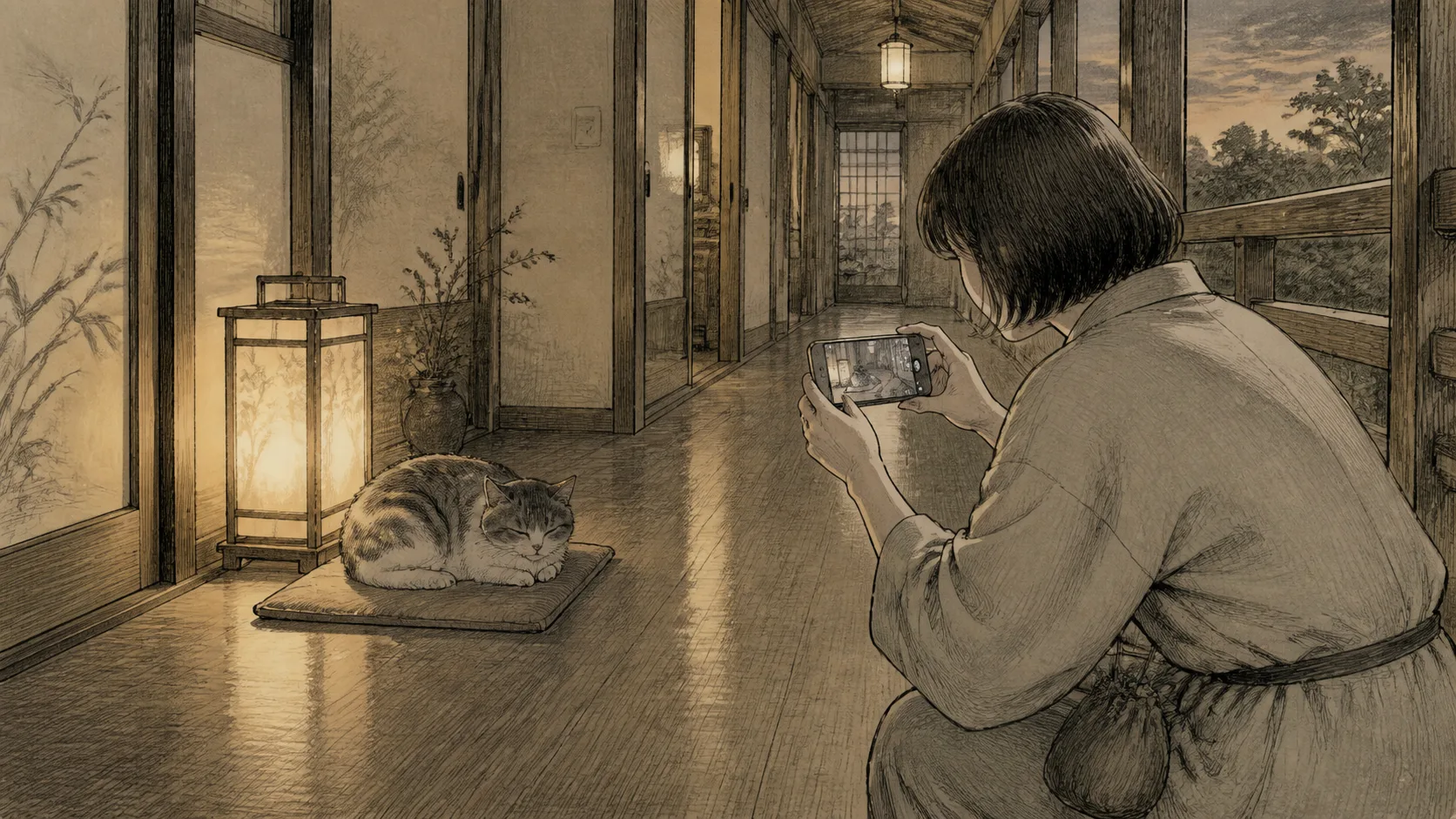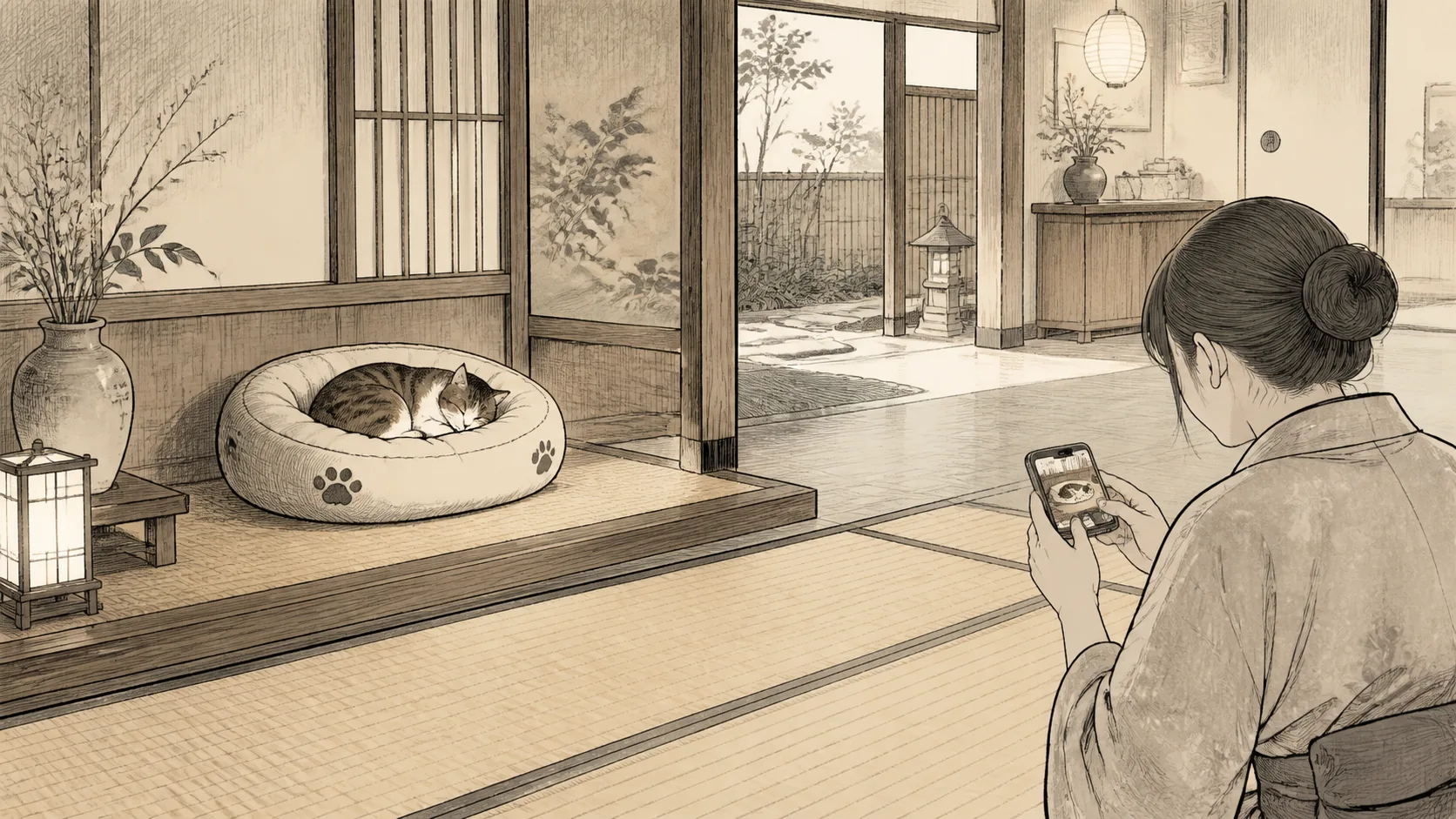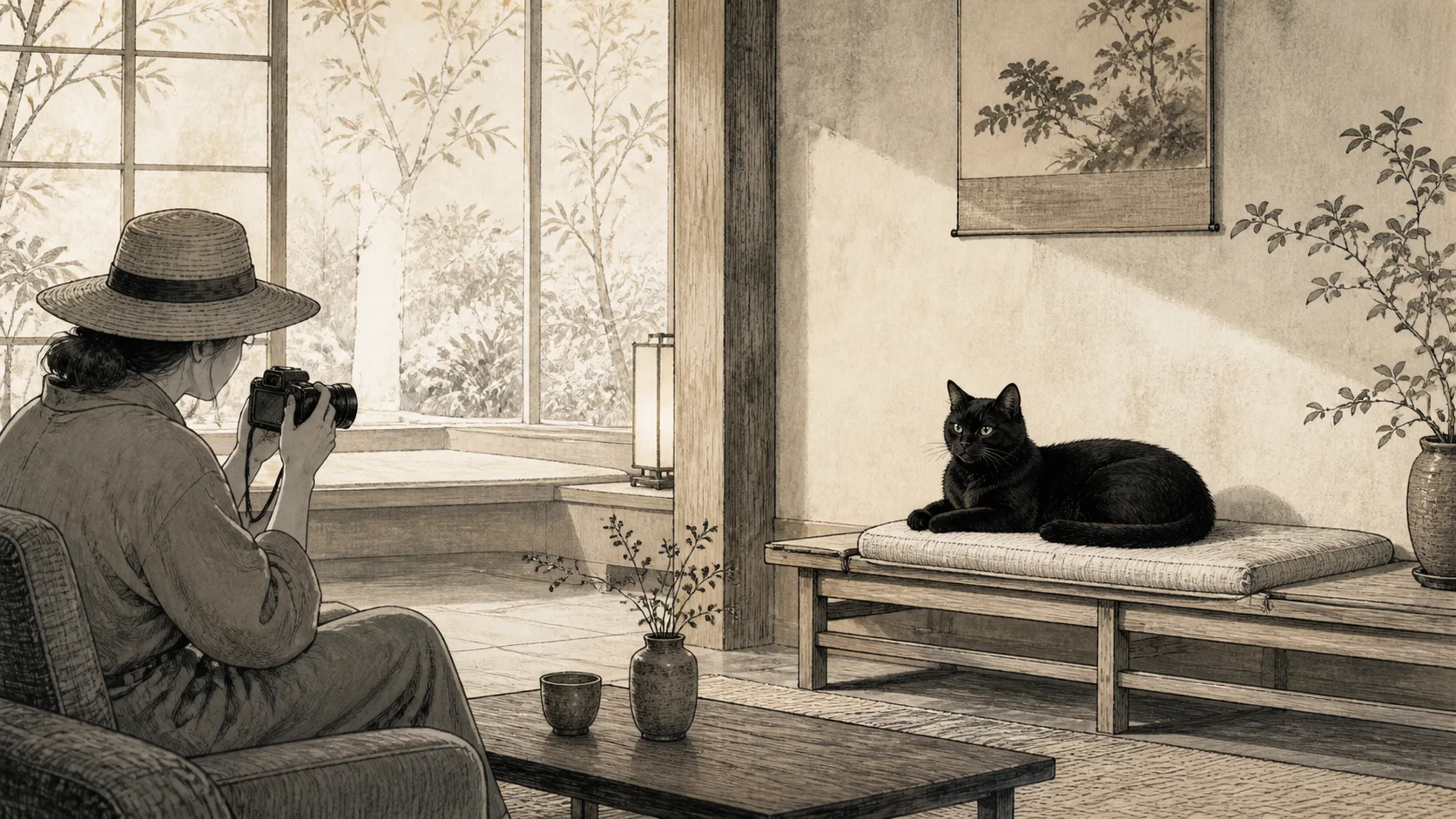
This article is a guide for how to photograph a black cat you meet at a cat inn without moving the cat. We do not turn the inn’s furniture into a photo set or pick up the cat and carry it into the background.
When a black cat is placed against a dark background, it becomes difficult to see its outline and eyes. What you need is not strong light, but a difference in brightness from the background and a soft angle of light.
See exactly where the black cat is
Look behind the cat first. If you have black furniture or a dark hallway, look for an angle that allows people to move slightly to the side and bring the pale walls, shoji screens, and light floors into the background.
Before putting the cat on a white cloth, moving the bed, or opening or closing the curtains, remember that this is the inn’s property and the cat’s living space. If there is no good angle, wait for another opportunity.
Choose soft horizontal light
If a window or indoor light shines on the cat from the side, it will be easier to see the outline of the cat’s face and back. There is no need to expose it to direct sunlight or lights.
When photographing a black cat by the window, sit in a position where the light is not blocked by the shadows of the smartphone and people. Do not get between the window and the cat; leave a space on the side where the cat can leave.
Focus on the face
Tap once near the cat’s eyes or face on your smartphone screen. If the device darkens the cat against the background, brighten the exposure a little. If you raise it too much, the background will become white and the texture of the hair will become unnatural, so adjust it little by little.
You will need permission from the inn before you can use sounds or toys to make the cat’s eyes look brighter. Choose a moment when they naturally look at you, or a profile shot.
Create a composition that shows the outline
If you take a photo from a position where the outside of the ears, back, and tail do not overlap with the background, you can convey the shape of the resident cat. If the cat’s entire body is dark, instead of trying to brighten just the cat’s face, you can leave it as a silhouette by the window.
Instead of getting closer and filling the screen, you can include the chairs, floor, and verandah of the inn to convey the feeling of the scene you encountered at the inn.Composition of resident cat and inn together will also be available for reference after publication.
Don’t wait too long to see the black cat’s expression
With black fur, changes in the resident cat’s ears and tail may be overlooked on the screen. Visually check the cat’s posture while shooting, and if the cat turns its head, lowers its body, or moves away, end the shooting.
“The resident cat is difficult to photograph,” so be careful not to put a burden on the cat by retaking the photo over and over again. One short shot is enough.
Edit to the extent that it leaves an actual impression.
You can make small adjustments to brightness and shadows after shooting, but try not to change the eye color or fur color too much. Excessive editing of photos introducing the inn’s resident cat may lead to misunderstandings about the actual cat.
Please check again after adjusting the brightness to see if the guest’s face, guest room number, or reservation information is visible in the background.
Check out black cat photography at Nekoyado
- Not moving the cat to a well-lit area
- The person moved to a position with a pale background
- Not using flash or light
- No forced gaze
- I checked the inn posting rules before publishing.
Summary
When photographing a black cat, keep the cat still and look for a pale background and soft side light. With a little exposure adjustment and a composition that shows the outline, let’s preserve the natural appearance of spending time at the inn.
Reference materials
Note: Please give priority to the inn information regarding the shooting location and the inn equipment.