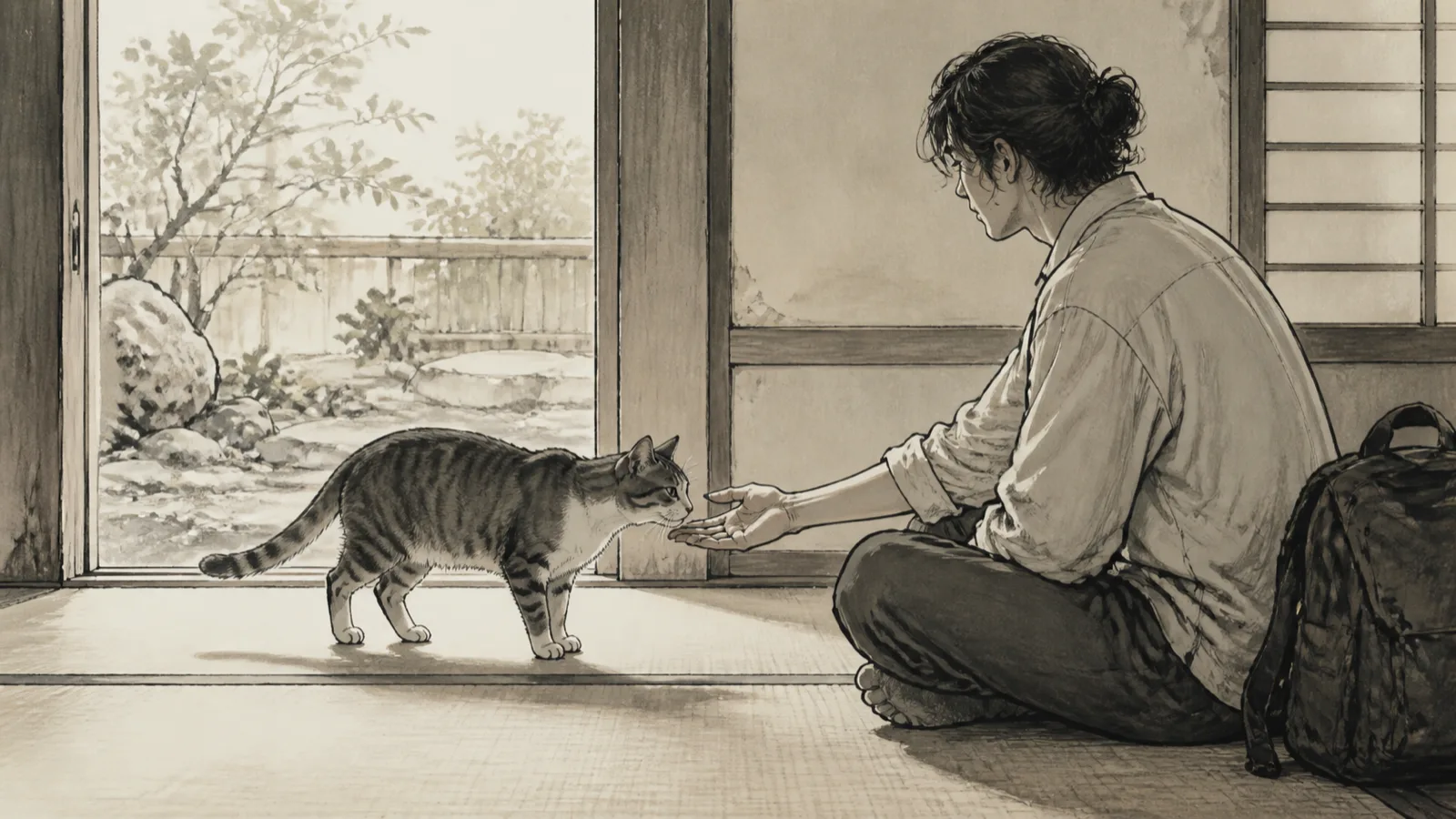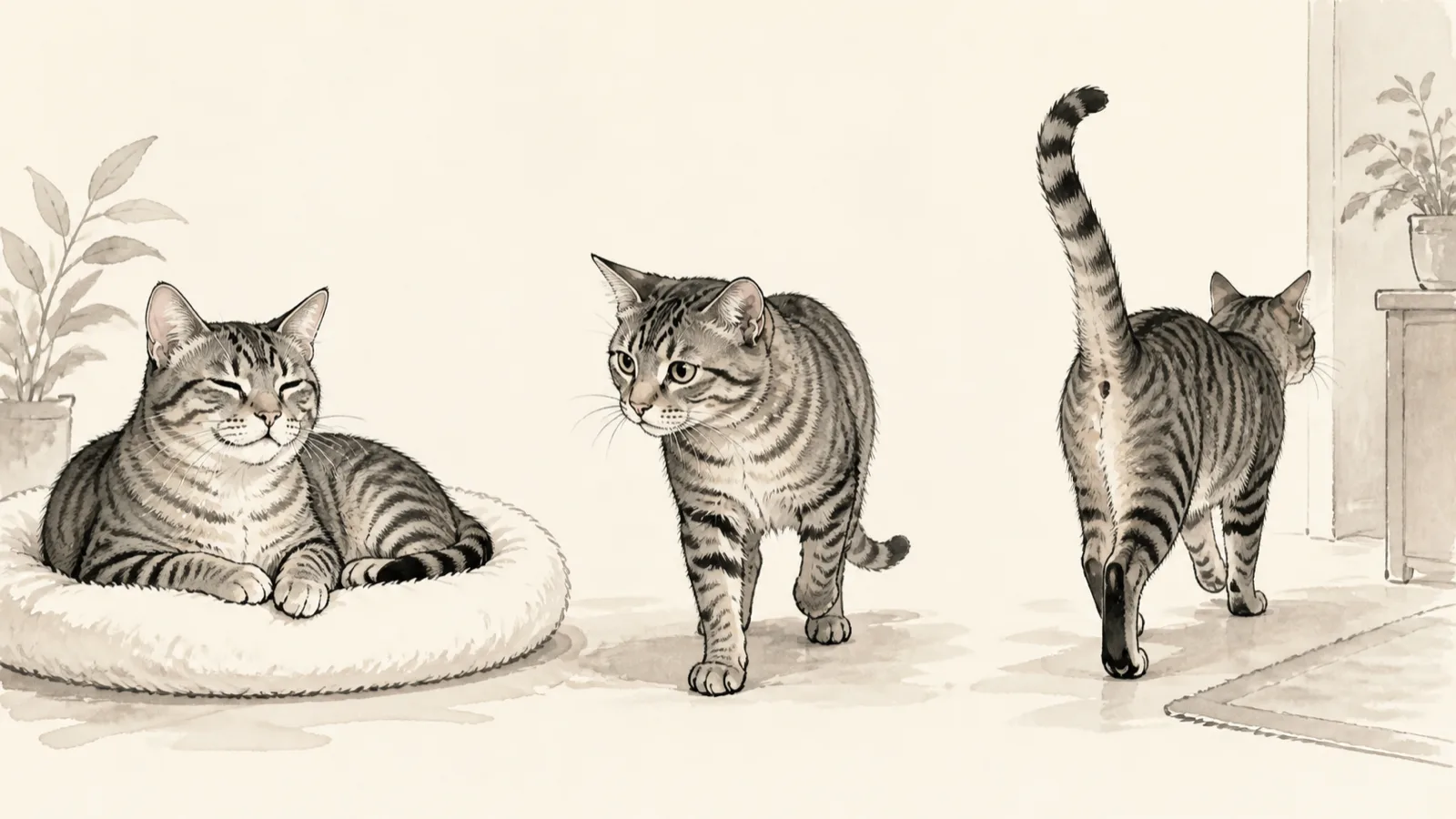
When a resident cat approaches you at a cat inn, you may wonder if it’s okay to touch it now. There are many words to describe how a cat feels, such as tail up, purring, and showing their belly. However, you cannot determine a cat’s emotion or next action based on one movement.
A cat’s posture changes depending on its relationship with its partner, surrounding sounds, escape routes, what happened just before, and its physical condition. The important thing is not to memorize the signs, but to look at the whole body and the situation, and stop immediately if there is a change.
- First, look at “the cat before touching it”
- Signs that the cat may be accepting contact
- Changes that may indicate uncertainty or watchfulness
- Changes that may mean the cat wants to be left alone
- Don’t judge only by ears or tail
- Even if the cat purrs, don’t make a decision based on that alone.
- Showing its belly doesn’t necessarily mean “pat me”
- Check with “Short stroke and stop”
- Take the cat leaving as a success
- Report any unusual behavior to the staff.
- Summary
- Reference materials
First, look at “the cat before touching it”
Look at the cat in its entirety for a few seconds before beginning the interaction.
- Is the cat’s body relaxed or stiff?
- Is it a natural standing/sitting/lying posture?
- Are the cat’s ears in their normal position, or are they tilted to the side or back?
- Is the tail calm or wagging vigorously?
- Are cats approaching people?
- Is there a way to leave?
- Are there any loud noises, children, or other cats around?
If the cat is sleeping, hiding, eating, or preoccupied with grooming at this point, watch instead of touching it. Even if a cat approaches a guest, it may just be passing by on its way.
Signs that the cat may be accepting contact
If you see more than one of the following and the cat’s entire body is loose, it may be receptive to brief contact.
- The cat slowly approaches on its own
- It chooses to check the scent of your hand
- It brings its cheek or head toward your hand
- It remains there in a natural posture
- Its facial and body muscles are not strongly tense
- It approaches again on its own after a brief stroke
However, this is not a license that says you are allowed to touch the cat. If the rules of the inn are that touching is prohibited, don’t touch the cat even if it approaches. Also, a cat that initially accepted contact may change its mind midway through the interaction.
Changes that may indicate uncertainty or watchfulness
There are situations where the cat may not have run away, but it may not necessarily be actively seeking contact.
- The cat stops in front of your hand
- It turns its face slightly away
- It looks between the person and the exit
- It lowers its body
- Its ears frequently turn in different directions
- Only the tip of its tail moves repeatedly
- It freezes rather than leaning toward the hand while being stroked
At this stage, don’t think, “The cat hasn’t run away, so it’s okay,” but stop and move back. A cat remaining there does not mean it enjoys being touched.
Changes that may mean the cat wants to be left alone
If you notice any of the following changes, end contact without chasing or stroking elsewhere.
- The cat flattens its ears to the side or back
- It strongly tenses or lowers its body further
- It lashes its tail against the floor or its body
- Its skin ripples
- It stares at the hand or raises a front paw
- It suddenly turns its face toward the hand
- It leaves or goes behind something
- It growls or makes a threatening sound
- It reaches out with a front paw or tries to bite
No need to wait until the last action. If you stop at small changes, you can end the interaction before the cat uses forceful methods to seek distance.
Don’t judge only by ears or tail
The ears also move to search for surrounding sounds. The tail also changes as it walks, adjusts its posture, and reacts to its surroundings. Pupil size is influenced not only by emotion but also by brightness.
For example, if the cat’s ears turn to the side for a moment, it may simply have heard a noise coming from the hallway. On the other hand, if the tail is up but the animal is stiff and looking for a way out, it is best not to rush into contact with it.
Look at the combination of “ears + eyes + tail + body + movement” and the changes from immediately before.
Even if the cat purrs, don’t make a decision based on that alone.
Purring sounds can be heard in relaxing situations. On the other hand, it is not possible to accurately judge a cat’s condition from just one sound.
Don’t just keep stroking the cat just because it’s purring, but also check for body tension and movements to pull away. Even in professional settings, it is necessary to carefully consider the background of a cat’s behavior when assessing their emotions.
Showing its belly doesn’t necessarily mean “pat me”
Cats may lie down and assume a position that shows their belly. They may be resting comfortably, but that doesn’t necessarily mean they’re asking for their bellies to be touched.
When meeting for the first time, avoid touching the cat’s belly. If the cat wants to be touched, start briefly by stroking around the cheeks, chin, head, neck, and shoulders. If the inn provides directions to areas that are safe to touch, follow those instructions.
Check with “Short stroke and stop”
If the cat approaches you and the inn also allows contact, you can use the following procedure.
- Gently stroke the cat’s cheeks and head area once or twice.
- Let go and wait.
- See if the cat approaches you again
- If you want to continue, touch it briefly and then stop again.
- End if there is a change
This method does not completely determine whether the cat agrees, but it will make it easier to notice changes than if you keep petting it. Please also take a look at How to interact with cats in a cat inn.
Take the cat leaving as a success
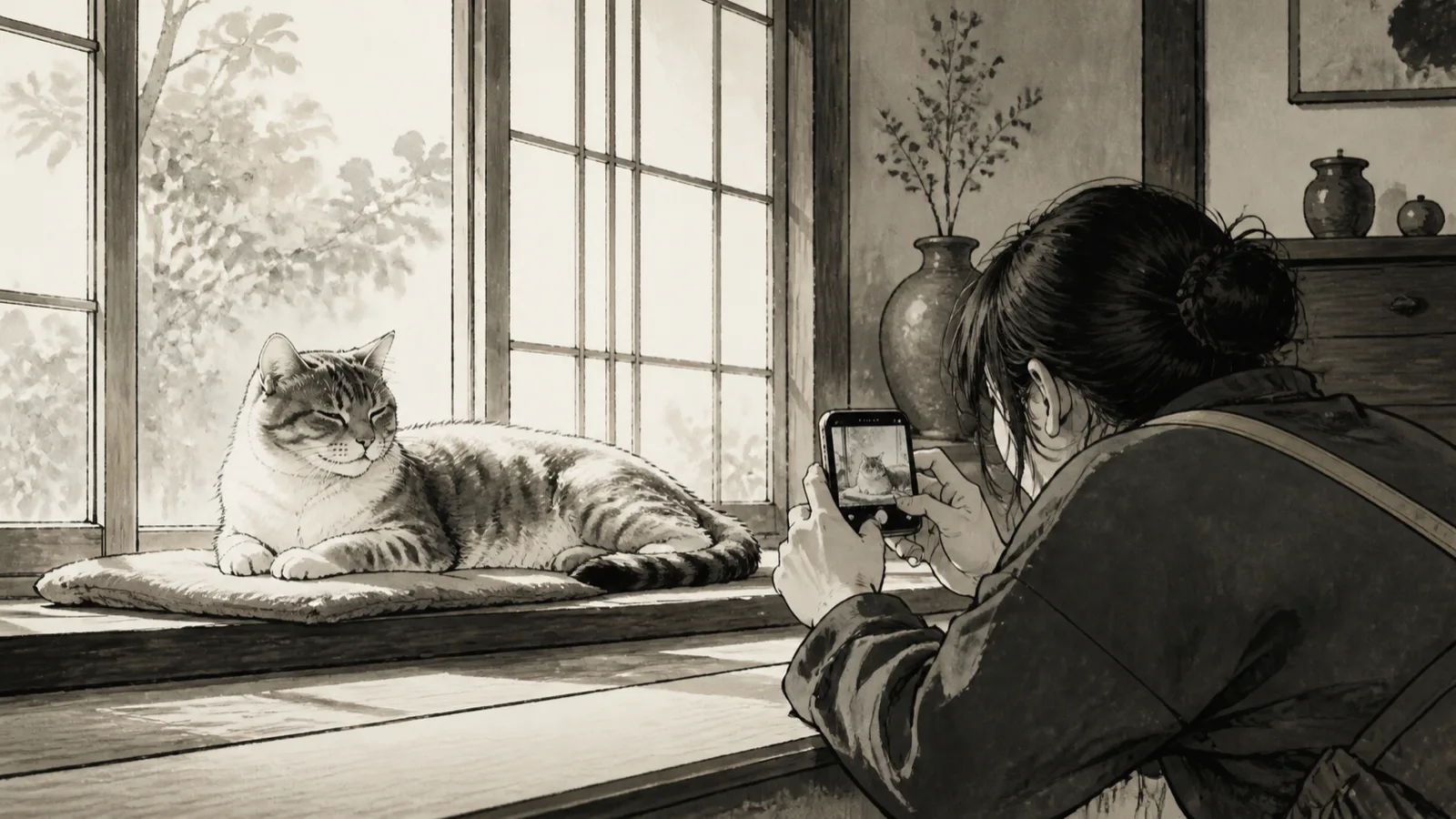
If the cat was able to leave of its own accord, it also meant that the guests were able to maintain a safe distance. Do not chase the cat, call it back, or move into its path to take a photo.
At a cat inn, guests can relax more if keeping cats close to them is not their only measure of success. Quietly observe the cat’s daily activities, including sleeping, walking past, and looking at you from a distance.
Report any unusual behavior to the staff.
If the inn’s resident cat seems to be having trouble moving, seems to be breathing or walking differently, or doesn’t move from the same spot for a long time, etc., tell the staff without diagnosing it yourself or touching it.
Guests are not aware of the cat’s usual condition or treatment history. The handling of the cat and its health will be left to the inn staff.
Summary
A cat’s “touchable signs” are not determined by the shape of the ears, eyes, or tail alone.
See if the cat approaches you, if the cat’s whole body is relaxed, and if the cat itself chooses to make contact even after a brief touch. And when in doubt, stop. Being cautious like this is safer for both the resident cat and the guests who are meeting it for the first time.
For the whole trip, see What is a cat inn? Complete Guide for First-time Guests.
Reference materials
- Recognising and assessing feline emotions during the consultation
- 2022 AAFP/ISFM Cat Friendly Veterinary Interaction Guidelines
- AAHA/AAFP: Behavior and Environmental Needs
- Cats Protection: How to pet a cat
- PDSA: Cat body language
Note: This article is not intended to diagnose a cat’s emotions or health condition. Since there are large individual and situational differences, please prioritize the rules of the accommodation and the judgment of the cat owner.