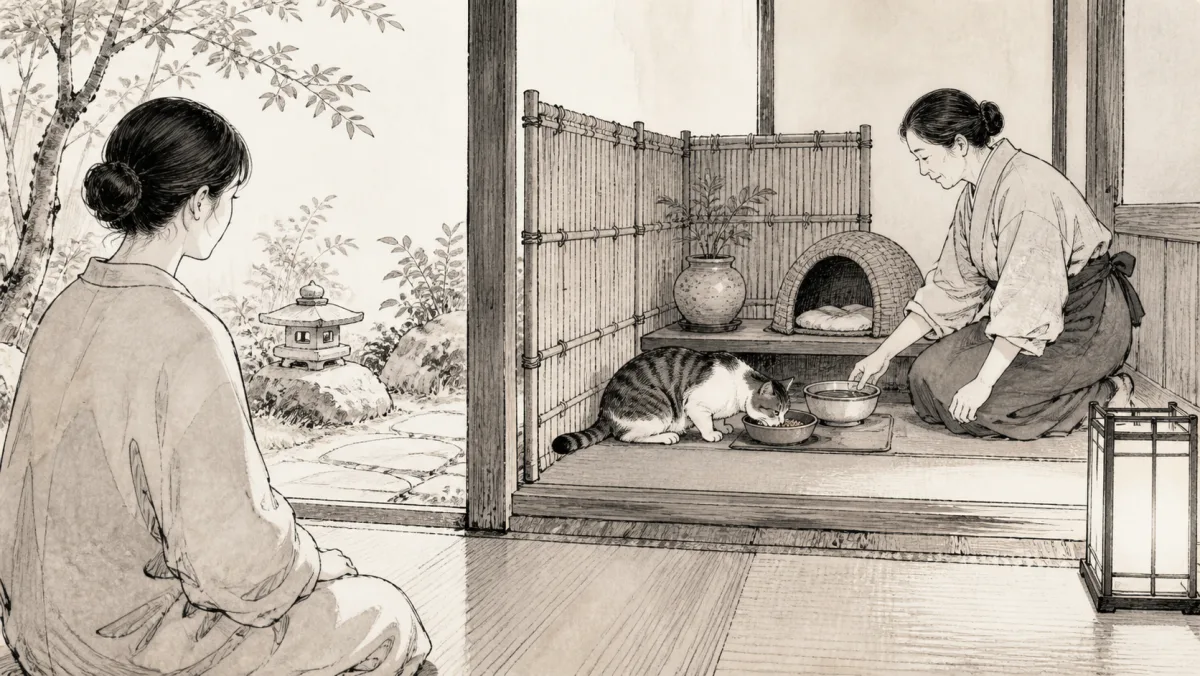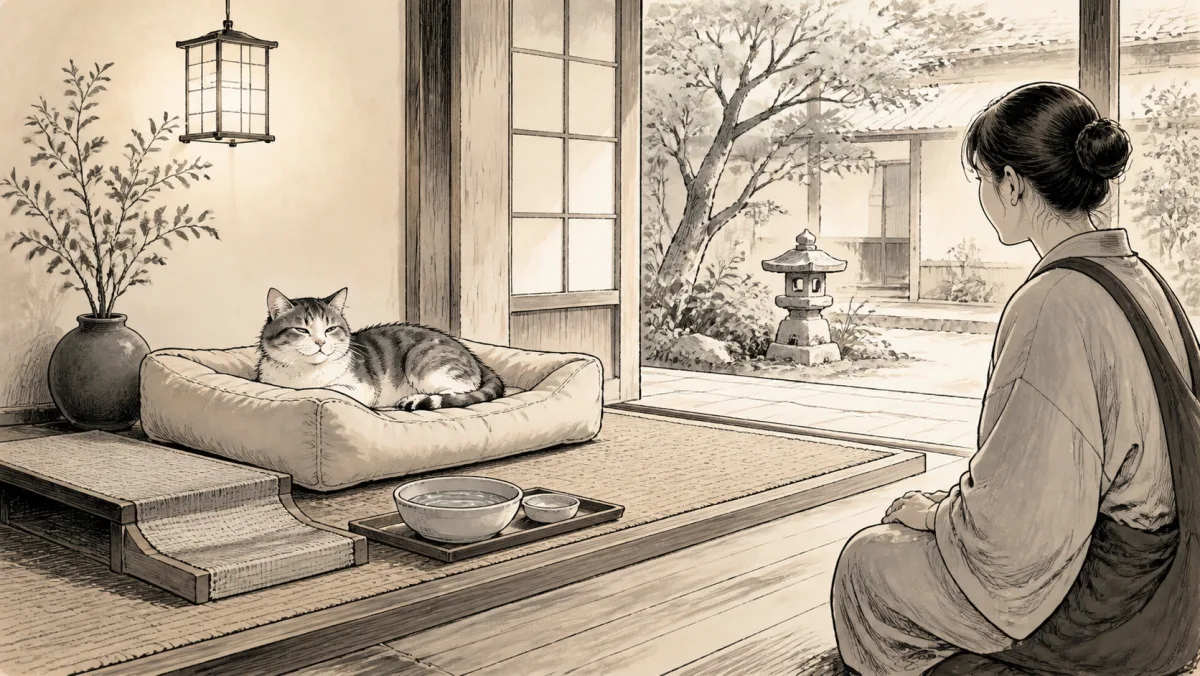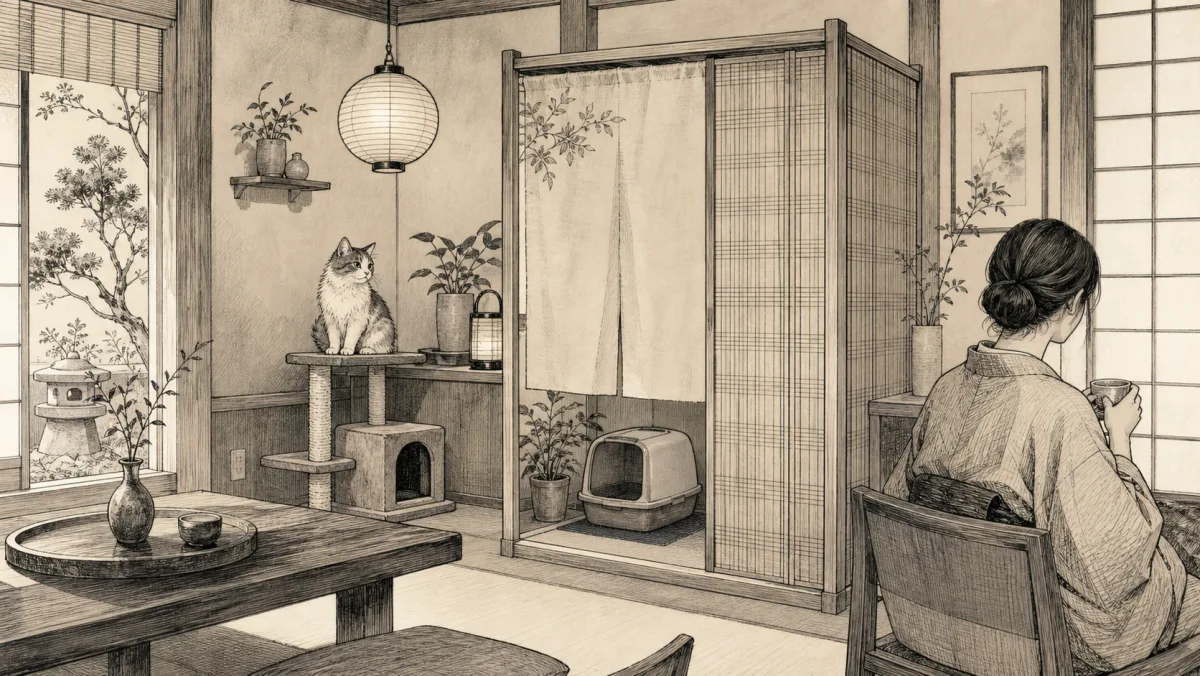
A cat entering the toilet at a cat inn is not an opportunity to photograph unusual behavior. Guests are advised to keep their distance from the excretion area, as cats can easily become defenseless and this has implications for health management.
- Don’t chase a cat that goes into the toilet
- Do not take photos and videos
- Do not block passages and escape routes
- Do not touch cat litter or litter box
- Report changes of concern without attempting a diagnosis
- Think separately from people’s eating areas.
- Guest confirmation
- Specific examples of avoiding photography and entry
- Information to convey
- Summary
- Related articles
- Reference materials
Don’t chase a cat that goes into the toilet
When the cat goes to the bathroom, don’t follow behind, leave the entrance or passage clear. Avoid crouching down to peek, pointing your smartphone, or calling them by name.
If the cat looks at you and returns, don’t touch it to reassure it and walk away.
Do not take photos and videos
Excretion itself, the inside of the litter box, and the condition of the cat litter are all related to the cat’s privacy and the sanitary management of the accommodation. We will not post it on SNS as a funny video or use it as material to speculate about a cat’s illness.
If you would like to take pictures of the toilet facilities inside the inn, please check with the inn to confirm the purpose and scope of disclosure.
Do not block passages and escape routes
In a multi-cat environment, another cat blocking the path to the litter box can be a sign of tension. Having people continue to stand at the entrance also impedes use.
Do not place luggage, chairs, or photographic equipment near the litter box, and do not change the layout of the inn so that cats can enter and exit from multiple directions.
Do not touch cat litter or litter box
Even if the cat looks dirty, guests do not add cat litter or clean up the cat’s excrement. The inn manages each cat’s health monitoring, cleaning procedures, and infection control measures.
If you accidentally touch something or need to clean the litter box area, wash your hands with soap and water and notify a staff member.
Report changes of concern without attempting a diagnosis
If you see your pet going in and out repeatedly, straining for a long time, making noises, appearing unable to defecate, or defecating outside of the litter box, notify the staff of the time and location.
Do not judge the cat as “bad training” or “cystitis,” and do not scold the cat. Changes in excretory behavior are due to multiple factors such as environment and health, and the decision is left to the inn and veterinarian.
Think separately from people’s eating areas.
Do not eat or drink near the cat’s litter box, and do not place bags on the floor on the dining table. Wash your hands after handling the cat, before eating, and after accidentally touching the litter box.
Guest confirmation
- Not following the cat into the toilet
- Do not take photos or videos while defecating.
- Do not block entrances or passageways.
- No contact with cat litter or excrement
- Reported the abnormality to the staff without diagnosing it
- Performed necessary hand washing
Specific examples of avoiding photography and entry
- Take a video of the cat going into the toilet
- Take a close-up photo of excrement or cat litter and post it on SNS
- Wait for the cat in front of the toilet and touch it immediately after it comes out.
- Read and photograph cleaning supplies and health records
- Immediately publish the smell and dirt as an evaluation of the accommodation
If you notice a cleaning issue, please quietly let the staff know before posting a photo and pointing it out. Do not move cat litter or medication yourself if there is a hygiene risk.
Information to convey
Convey the location, time, appearance, and characteristics of the cat. Rather than diagnosing or evaluating the situation as “sick” or “poorly managed,” it is limited to facts that allow the staff to determine the difference from daily life.
The area near the toilet is a place where cats need an escape route. After informing the staff, please leave the area and do not stay for confirmation.
Summary
The cat’s toilet is not a place for guests to enjoy observing, but a place to protect the safety and health of the cat. If you see one, keep your distance and calmly report any abnormalities to the staff.