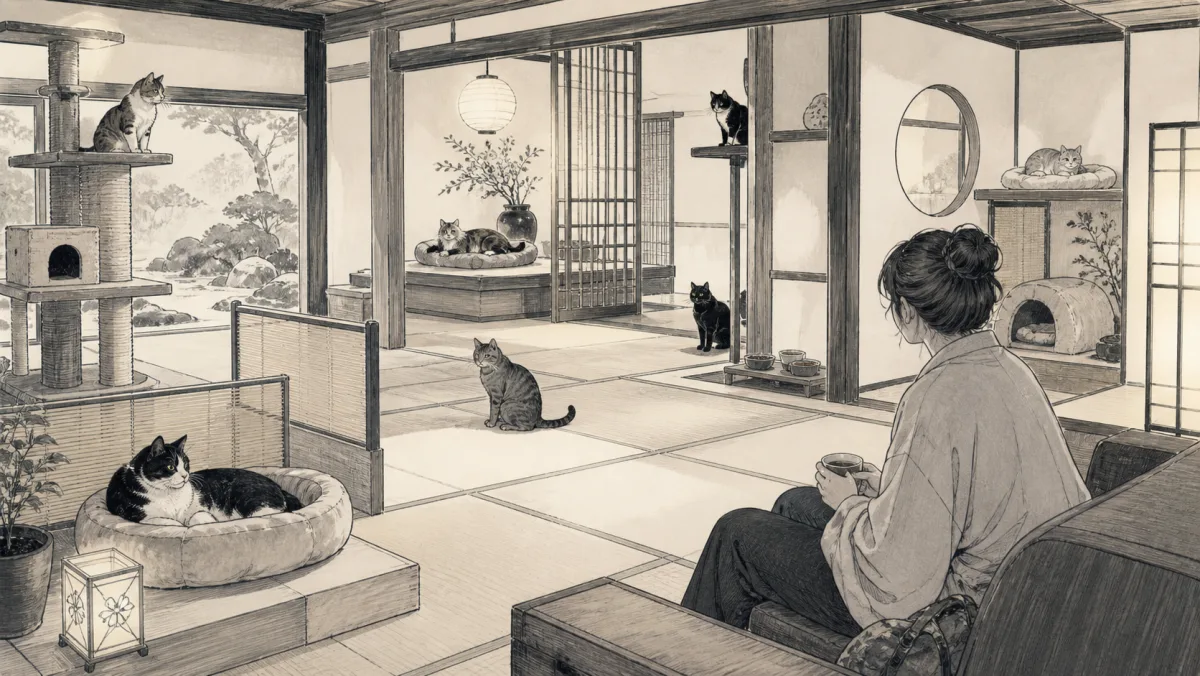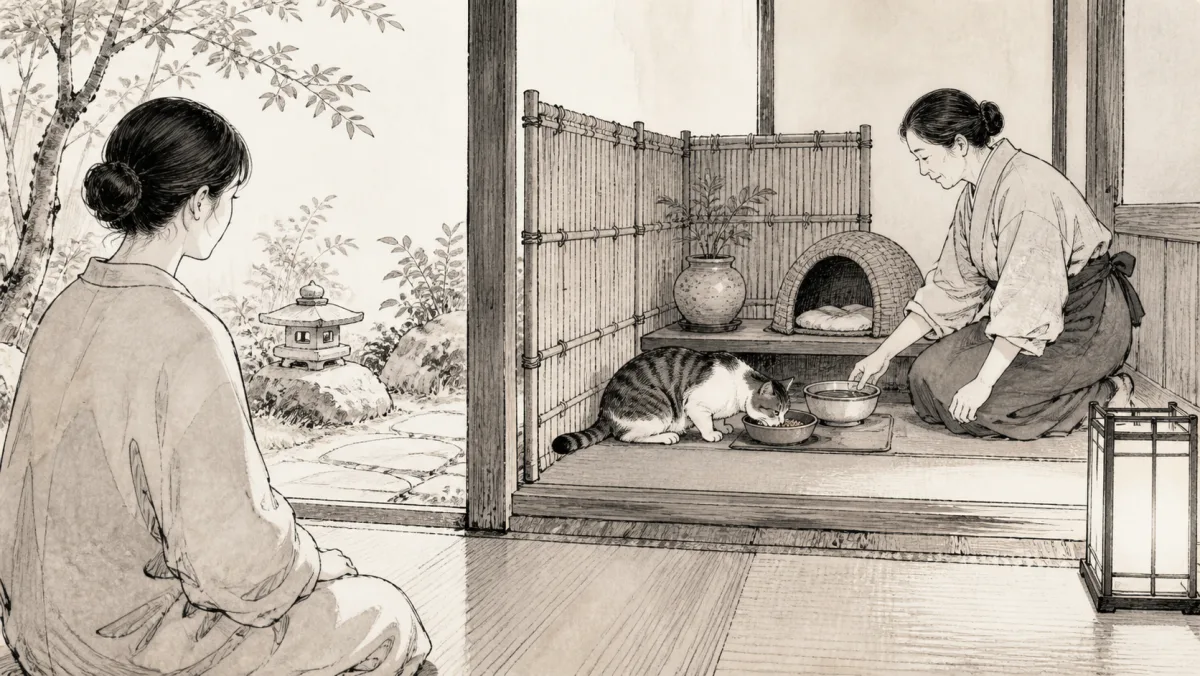
Once the resident cat starts eating, you may want to get a closer look and take a photo. However, meals are not a time for customer service, but a time for managing the health of the cats and the relationships between cats.
- Stay away from tableware
- In a multi-head environment, gaze also becomes tense.
- Do not share other people’s food
- Cat treats just follow the inn’s procedures
- Do not chase immediately after eating
- Manage guests’ meals as well.
- Check meal times
- Response to different situations during meals
- Range left to staff
- Summary
- Related articles
- Reference materials
Stay away from tableware
Do not touch the cat’s head or back while eating, and do not place your smartphone next to the dish. If the cat changes the rate at which it eats, stiffens up, looks around, or stops eating and moves away, it may be burdened by your presence.
Do not turn the tableware towards you or move it to a bright place.
In a multi-head environment, gaze also becomes tense.
In accommodations with multiple cats, tensions may arise such as other cats staring, blocking paths, or approaching eating areas. We respect why the inn separates dishes and time.
If guests serve treats and collect all the cats, this can disrupt the controlled diet and create competition between the cats.
Do not share other people’s food
Do not feed food with human flavorings, even fish, meat, and dairy products. Each cat may have its own therapeutic diet, allergies, medications, and intake management.
If you find food, skewers, bones, or packaging that has been dropped on the floor, do not try to pick it up from the cat’s mouth yourself; instead, tell the staff.
Cat treats just follow the inn’s procedures
Even if the inn offers a cat treat experience, follow the target cats, amount, order, and feeding method. Do not give snacks brought from home or left over from the previous day without permission.
A cat begging is not permission to give.
Do not chase immediately after eating
After the cat has finished eating, it may move on to grooming, drinking water, using the restroom, and resting. Do not follow them to take pictures of their expressions after eating; instead, keep the aisle clear.
If you see the cat vomiting back up, having difficulty eating, or being snatched away by another cat, report it to the staff without diagnosing it.
Manage guests’ meals as well.
Even in hotels where cats come into the dining hall, we do not let them lick the plate or eat on our laps. When you leave your seat, do not leave food unattended and receive the inn’s directions.
Check meal times
- Keep your distance from cat dishes
- Do not touch or take pictures while eating
- Do not move dishes or water
- Don’t give other people food
- Observe the permission and quantity of cat treats at the inn.
- Report any abnormalities to the staff
Response to different situations during meals
| What we saw | What guests should do |
|---|---|
| Cat leaves the dish | Don’t chase or move the dish |
| Another cat approached the dish | Don’t share it yourself, tell the staff |
| There is leftover food | Report it as observed without judging the quantity |
| He appears to be vomiting or choking | Tell him the time and facts, and do not put his hands in his mouth |
| Wants someone’s food | Don’t give it to someone and put away the food |
Do not bring your face close to the tableware to take photos or videos, or call the cat’s name to make it turn towards you. Even if the dining area is a common area, it is not a place for viewing.
Range left to staff
Appetite, amount of food, order of tableware, therapeutic food, and medication are matters that are managed by the inn. Guests only report what they observed, such as “It didn’t look like they were eating.”Don’t make the decision to add more food, pass another cat’s plate, or move the dish to a quiet place.
Summary
Meal time for cats is not only a time for nutrition, but also for peace of mind and protection of the relationship between cats. Guests should stay away from the cats to observe them, leave the dishes and cat’s path clear, and leave the feeding to the inn.